Master the Stroke-and-Distance Golf Penalty
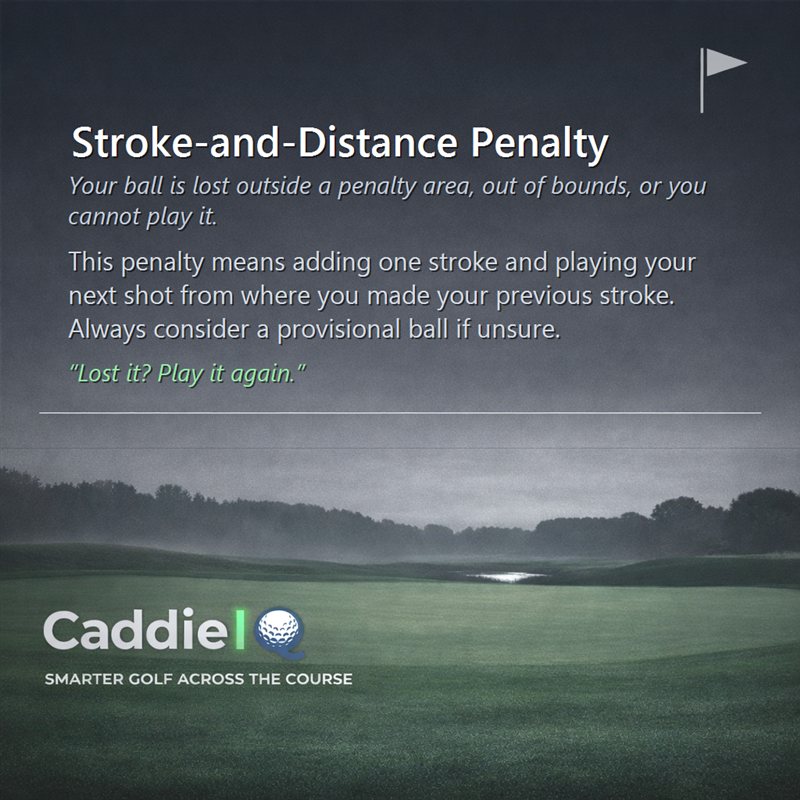
Every golfer has felt that sinking feeling: you've hit a seemingly good shot, only to find your ball has vanished. Or perhaps it's clearly out of bounds, or in an unplayable lie. The confusion around what to do next, and the dreaded penalty, can disrupt your round. Understanding the Stroke-and-Distance penalty is crucial for maintaining your score and pace of play.
Why it Happens: The "Lost Ball" Scenario and More
This penalty isn't just for a ball truly lost in the rough. It applies in several key situations:
- Lost Ball: Your ball cannot be found within the three-minute search time outside of a penalty area.
- Out of Bounds (OB): Your ball comes to rest with its entire circumference outside the designated boundary of the course, typically marked by white stakes or lines.
- Unplayable Lie: You deem your ball unplayable anywhere on the course, except in a penalty area. While you have other relief options here (such as two club-lengths or back-on-the-line relief), one option is always Stroke-and-Distance.
The core principle behind this rule is fairness and preventing players from gaining an undue advantage or spending excessive time searching. It ensures a consistent approach to dealing with balls that are effectively removed from play.
The Fix: Applying Stroke-and-Distance Correctly
When faced with any of the above situations, the procedure is clear:
- One-Stroke Penalty: You add one penalty stroke to your score.
- Play from Previous Spot: You must play your next shot from where you made your previous stroke. This means returning to the tee box if your drive was lost or OB, or dropping near where your last approach shot was played if that's where the issue occurred.
The Provisional Ball Advantage: This is where smart play comes in. If there's any chance your ball might be lost outside a penalty area or out of bounds, always play a provisional ball.
- How to Play a Provisional: Announce "Provisional" to your playing partners. Play a second ball from the same spot as your previous stroke.
- Why it's Crucial: If your original ball is indeed lost or out of bounds, you simply continue play with your provisional ball, incurring only the one-stroke penalty. You've saved yourself a long walk back and significant time. If your original ball is found in bounds and playable, you pick up your provisional and continue with the original without penalty.
- When NOT to Play a Provisional: If your original ball is known to be in a penalty area, you cannot play a provisional for "lost or out of bounds." You must proceed under the penalty area rules.
Practical Drill: Embrace the Re-Hit
While you can't "drill" losing a ball, you can certainly drill the response to it. During a practice round or even just a trip to the driving range, intentionally hit a few balls into areas where they'd clearly be out of bounds or unplayable.
- The Re-Hit Routine: Mentally acknowledge the situation (OB/Lost/Unplayable). Take your one-stroke penalty. Walk back to your "previous spot" (e.g., the tee or a designated spot on the range). Set up and hit your next shot as if it were a real provisional or re-hit.
This drill builds the habit of quickly accepting the penalty and efficiently moving on, rather than wasting time searching or debating. It also reinforces the mental resilience needed when a shot goes awry.
Conclusion
The Stroke-and-Distance penalty is a fundamental golf rule designed to keep the game fair and flowing. By understanding when it applies and, crucially, by making the smart decision to play a provisional ball when uncertainty arises, you can minimise its impact on your score and your enjoyment of the game. For instant rule clarifications on the course, CaddieIQ can be a valuable tool, helping you make informed decisions quickly.
Related tips
Get this kind of advice on every shot
CaddieIQ is your free AI golf caddie - instant club & shot advice, swing fixes and a daily tip.
Try CaddieIQ free