Your Guide to Divot Repair: Etiquette and Course Care
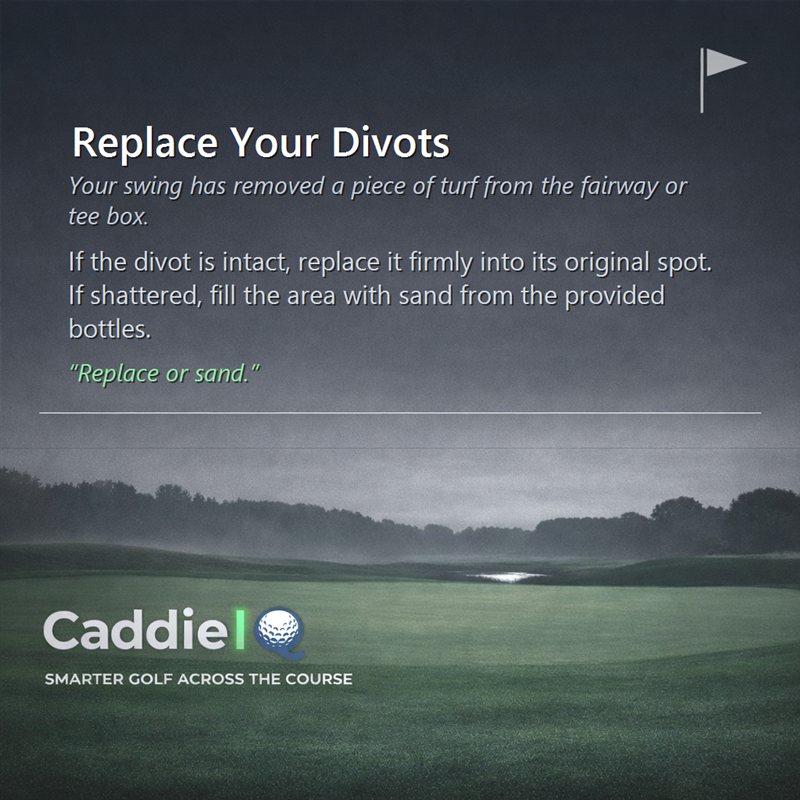
Every golfer, from beginner to seasoned pro, has experienced that satisfying thud of a perfectly struck iron shot – followed by the distinct sound of turf being displaced. This is your divot, and while a sign of proper ball-then-turf contact, how you address it speaks volumes about your respect for the game and the course. Replacing your divots isn't just about etiquette; it's a crucial part of golf course maintenance that benefits every player.
Why Divots Happen and Why They Matter
A divot occurs when your club head, travelling at high speed, strikes the ball first and then impacts the ground immediately after, removing a piece of turf. This is particularly common and often desirable with irons, as it allows for clean contact and imparts spin. While a good divot indicates a solid strike, an un-repaired divot leaves an unsightly and uneven patch, impacting future players' lies and making the course look unkempt.
- Impact on Play: An open divot can collect water, become muddy, or create an uneven lie for the next golfer.
- Course Health: Unrepaired divots leave the grass roots exposed, making them susceptible to disease, drying out, and slower recovery. Proper repair helps the turf heal much faster.
- Etiquette: It's a fundamental aspect of golf etiquette, demonstrating consideration for your fellow golfers and the grounds staff who work tirelessly to maintain the course.
The Fix: Replacing or Sanding Your Divot
The method you use depends on the state of the divot:
If the Divot is Intact:
If the piece of turf comes out in one relatively solid piece, the fix is straightforward:
- Locate and Retrieve: Quickly find the piece of turf. It's usually just ahead of where your ball was.
- Replace: Place the divot back into its original spot, ensuring the grass side is facing up and it fits snugly like a jigsaw puzzle piece.
- Press Firmly: Use your foot to gently but firmly press the divot down. This ensures good contact between the roots and the soil, promoting faster re-growth and preventing it from being dislodged by another player or a mower.
If the Divot is Shattered or Missing:
Sometimes the turf explodes into many small pieces, or you can't find the main piece. In this common scenario, sand is your solution:
- Grab Your Sand Bottle: Most courses provide sand bottles on trolleys or golf carts. Always carry one.
- Fill the Area: Liberally apply sand to the entire affected area. The sand protects the exposed soil, provides a medium for new grass to grow, and levels the playing surface.
- Smooth It Out: Use your foot or the back of your club to gently smooth the sand so it's level with the surrounding turf. Don't create a mound; aim for a flat surface.
The "Divot Duty" Routine
Making divot repair a habit is key. Develop a simple routine:
Swing & Observe: After every iron shot from the fairway or tee box, immediately observe the ground. Did you take a divot? If so, assess its condition.
Act Promptly: Don't wait. As soon as you've observed, take the appropriate action – replace or sand. This ensures you don't forget and keeps pace of play moving.
Pre-Shot Reminder: Before you even swing an iron, give yourself a mental note: "Swing, then repair." This embeds the habit into your game.
Play Your Part, Preserve the Course
Replacing your divots is a small act with a significant impact. It's a mark of a considerate golfer and contributes directly to the beauty and playability of the course for everyone. Just as CaddieIQ helps you refine your game with intelligent insights, taking care of your divots is part of being a smarter, more responsible golfer. Let's all commit to leaving the course in better condition than we found it.
Related tips
Get this kind of advice on every shot
CaddieIQ is your free AI golf caddie - instant club & shot advice, swing fixes and a daily tip.
Try CaddieIQ free