Mastering Hardpan Lies: Hit Down, Not Up!
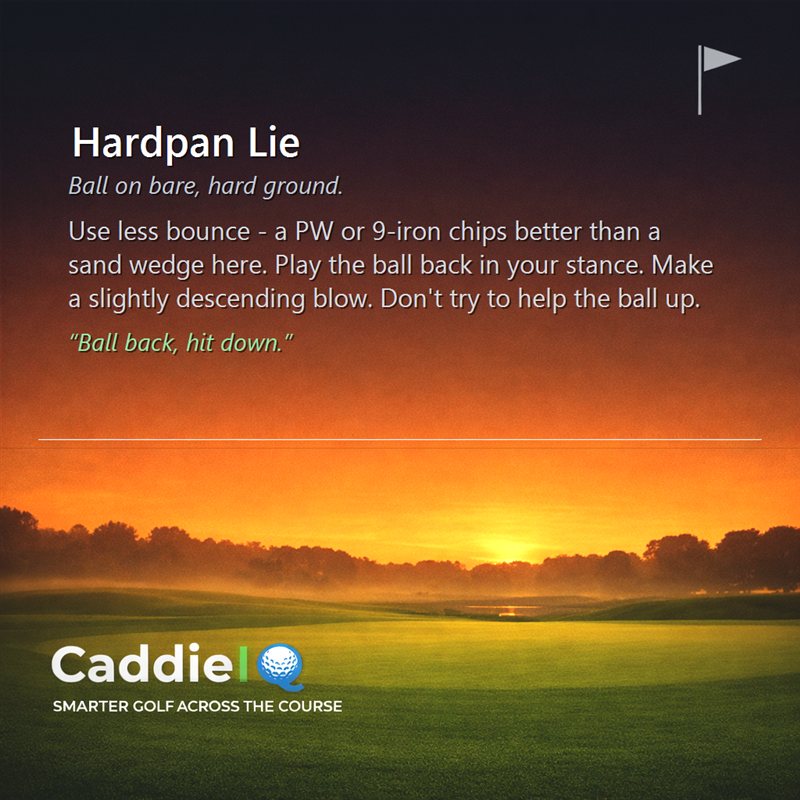
Few golf shots are as intimidating as a ball sitting on bare, hard ground – the dreaded hardpan lie. The fear of a bladed shot, a fat chunk, or worse, a complete miss, can paralyse even experienced golfers. But with the right approach and understanding, you can turn this challenging lie into a scoring opportunity. Let's break down how to tackle hardpan with confidence.
Understanding the Hardpan Challenge
A hardpan lie occurs when your ball rests directly on compacted soil, often found on the fringes of greens, worn-out fairways, or even in bunkers with minimal sand. The ground offers no give, meaning your club has no margin for error. Traditional chipping techniques, which often rely on the club's bounce to slide under the ball, can lead to disaster here. The key is to adapt your setup and swing to minimise ground interaction and ensure pure contact.
The CaddieIQ Fix for Hardpan Lies
Conquering hardpan requires a precise, deliberate strategy. Follow these steps for clean, crisp contact:
1. Club Selection: Less Bounce is Your Friend
- Forget your sand wedge or lob wedge for this shot. These clubs typically have a lot of bounce, designed to prevent them from digging into soft turf or sand.
- Instead, opt for a pitching wedge (PW) or a 9-iron. These clubs have less bounce, allowing the leading edge to make cleaner contact with the ball first, rather than bouncing off the hard ground.
- The lower loft also means you'll get more roll, which is often desirable when chipping from hardpan.
2. Ball Position: Back in Your Stance
- Move the ball slightly back in your stance, typically opposite the instep of your trail foot.
- This encourages a slightly steeper angle of attack and ensures you hit the ball before the ground.
3. Setup for Success
- Weight Distribution: Shift about 60-70% of your weight onto your lead foot. This helps to promote a descending blow.
- Hands Forward: Position your hands slightly ahead of the ball, effectively de-lofting the clubface further. This also helps to ensure the leading edge is presented cleanly.
- Shaft Lean: The shaft should lean towards the target, aligning with your lead arm.
4. The Swing Thought: Ball Back, Hit Down
- Your primary goal is to make a slightly descending blow, hitting the ball first and then taking a shallow divot (or simply brushing the ground) after impact.
- Think of it as pinching the ball off the surface. Do not try to help the ball up into the air; the club's loft will do the work if you make clean contact.
- Keep your wrists firm and minimise any wrist hinge in the backswing. This promotes a more controlled, compact swing.
- Focus on a smooth, abbreviated swing. The backswing and follow-through should be roughly equal in length.
Practice Drill: The Towel Drill
To ingrain this technique, try the towel drill. Place a small towel or headcover about an inch or two behind the ball. Your goal is to hit the ball cleanly without touching the towel. This forces you to focus on hitting down on the ball first, which is crucial for hardpan lies. For instant, personalised feedback on your swing or lie, consult CaddieIQ, your free AI golf caddie, to refine your approach.
Conclusion
Hardpan lies don't have to be your undoing. By selecting the right club, adjusting your ball position, and committing to a descending strike, you'll gain the confidence to tackle these tricky shots. Practice this technique, and you'll soon be hitting crisp, controlled shots from even the toughest lies.
Related tips
Get this kind of advice on every shot
CaddieIQ is your free AI golf caddie - instant club & shot advice, swing fixes and a daily tip.
Try CaddieIQ free