Conquer the Light Rough: Golf Tips for Better Shots
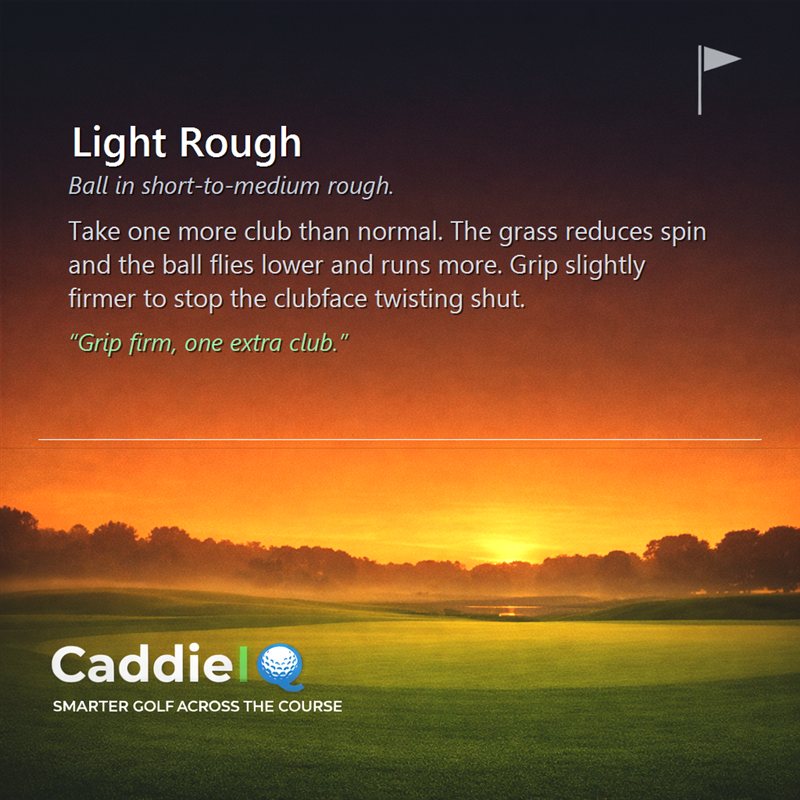
The light rough – that seemingly innocuous strip of slightly longer grass just off the fairway – can be one of golf's most frustrating lies. It looks playable, but often leads to fluffed shots, reduced distance, and a general loss of control. Many golfers underestimate its impact, but understanding the dynamics at play is key to mastering these tricky situations.
When your golf ball settles in light rough, even short-to-medium length grass, a few critical things occur that alter its flight compared to a clean lie on the fairway. Firstly, the grass between the clubface and the ball acts like a cushion, reducing the friction required to impart backspin. Less backspin means the ball flies lower and has a tendency to run out more upon landing. Secondly, the resistance of the grass can cause the clubface to twist slightly at impact, particularly if your grip is too relaxed. This twisting can lead to hooks or slices, further compromising accuracy.
Addressing the light rough effectively requires a conscious adjustment to your normal approach. Here’s how to tackle it:
The Correct Club Selection
The cardinal rule for light rough is to take one more club than you normally would for that distance. Since the grass reduces spin and consequently limits carry distance, an extra club (e.g., a 7-iron instead of an 8-iron) will help compensate for the anticipated loss of yardage. This ensures you still reach your target, even with the slightly altered ball flight.
Mastering Your Grip
To counteract the clubface twisting shut due to the grass resistance, you need a slightly firmer grip. This doesn't mean a death grip that tenses your arms and shoulders, but rather a firming up of the last three fingers of your lead hand (for right-handers, this is the left hand). This added control will help keep the clubface square through impact, promoting a straighter ball flight. Imagine your grip is at an 8 out of 10 on the firmness scale, rather than your usual 6 or 7.
Adjusting Your Setup and Swing
While the swing thought remains 'grip firm, one extra club,' a subtle adjustment to your setup can also be beneficial. Position the ball slightly back in your stance – perhaps half a ball width – to encourage a slightly steeper angle of attack. This helps you strike the ball first, minimising the amount of grass caught between the clubface and the ball. Focus on a smooth, controlled swing, ensuring you accelerate through impact. Avoid trying to 'muscle' the ball out, as this can lead to mishits.
Practice Drill: The 'One-Club-Up' Challenge
Head to the practice area or a quiet part of the course where you can simulate light rough lies. Place balls in various short-to-medium rough spots. For each shot, commit to taking one more club than you'd typically use for the distance. Focus intently on that slightly firmer grip. Pay attention to the lower flight and the increased roll. This drill helps build confidence and trains your brain to instinctively make the right adjustments when you encounter light rough during a round. You can even use a tool like CaddieIQ to track your distances from these lies, helping you dial in your club selection even more precisely.
Don't let light rough intimidate you. By understanding the simple physics at play and implementing these practical adjustments – taking an extra club, firming up your grip, and making minor setup tweaks – you'll transform those potentially troublesome lies into opportunities for solid, controlled shots. Practise these techniques, and watch your scores improve, even from the 'easy' rough.
Related tips
Get this kind of advice on every shot
CaddieIQ is your free AI golf caddie - instant club & shot advice, swing fixes and a daily tip.
Try CaddieIQ free