Mastering Downwind Golf Shots: Gain Easy Distance
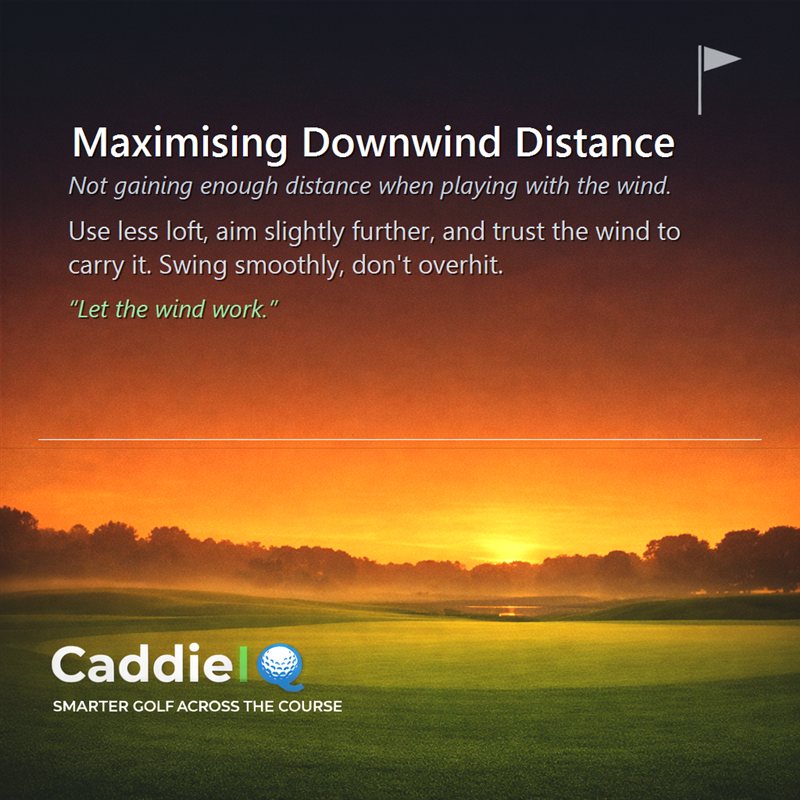
Ever felt the frustration of hitting a seemingly perfect shot with the wind at your back, only for it to fall short of the distance you anticipated? You're not alone. Many golfers struggle to truly capitalise on downwind conditions, often leaving valuable yards on the course. But with the right approach, you can transform these shots from frustrating misses into genuine distance advantages. It's time to learn how to let the wind work for you.
Why You're Not Gaining Enough Downwind Distance
The common culprit isn't a lack of power; it's often a misunderstanding of how wind interacts with your ball flight. Here's why you might be missing out:
- Over-swinging: Trying to hit the ball harder often leads to a loss of control, poor contact, and excessive backspin. This high spin rate causes the ball to 'balloon' or fly too high, allowing the wind to push it upwards rather than propelling it forward.
- Incorrect Club/Loft: Using a club with too much loft for the conditions. A higher-lofted club naturally generates more backspin and a steeper launch, which is counterproductive in a strong tailwind. The ball simply floats rather than penetrating through the air.
- Lack of Trust: Many golfers don't fully trust the wind's ability to carry the ball, leading to conservative swings or aiming short, negating any potential distance gain.
The Fix: Leveraging the Wind Effectively
Maximising downwind distance is about smart strategy and a controlled swing. Here’s how to do it:
1. Club Selection: Less Loft is Your Friend
This is perhaps the most crucial adjustment. Instead of your usual club for the distance, consider taking one or even two clubs less. For example, if it's typically a 7-iron shot, try a 6-iron or even a 5-iron. The goal is to hit a lower, more penetrating ball flight with less backspin, allowing the wind to push it forward, not up. CaddieIQ can be a fantastic tool for this, helping you analyse conditions and suggesting optimal club choices for downwind scenarios.
2. Aim Strategically and Trust the Carry
With a lower trajectory and the wind's assistance, your ball will likely have more roll upon landing. Aim slightly further than your intended target, accounting for that extra ground game. You need to trust that the wind will do its job; don't compensate by trying to overhit it.
3. Smooth, Controlled Swing: Let the Wind Work
Resist the urge to 'muscle' the shot. A smooth, rhythmic swing at around 70-80% effort promotes better contact and a more penetrating ball flight. Focus on striking the ball first, then the turf, to minimise excessive backspin. Your swing thought should be simple: 'Let the wind work.'
4. Ball Position Adjustment
To further encourage a lower launch, try moving the ball slightly back in your stance (more central for irons, or slightly back of centre for woods) compared to your usual setup. This subtle change can help de-loft the clubface at impact.
5. Finish Low
Visualise and execute a finish where your hands are lower than usual. This encourages a shallower attack angle and helps prevent the clubface from flipping up, which can add unwanted loft and spin.
Practice Drill: The Punch Shot
To ingrain these feelings, head to the driving range on a windy day and try the 'Punch Shot' drill:
- Take a mid-iron (e.g., 7-iron).
- Set up with the ball slightly back of centre and your hands slightly ahead of the ball.
- Make a half-swing, focusing on solid contact and a low, controlled finish, almost like you're trying to keep the ball under a tree branch.
- Observe how the ball penetrates through the wind.
- Gradually increase your swing length while maintaining the focus on a lower flight and a smooth tempo.
Conclusion
Maximising downwind distance isn't about raw power; it's about intelligent club selection, strategic aiming, and a controlled swing that allows the wind to be your ally. By adopting these practical techniques, you'll soon be turning frustrating downwind shots into genuine distance advantages, lowering your scores in the process.
Related tips
Get this kind of advice on every shot
CaddieIQ is your free AI golf caddie - instant club & shot advice, swing fixes and a daily tip.
Try CaddieIQ free