Mastering Crosswinds: Aiming Strategies for Golfers
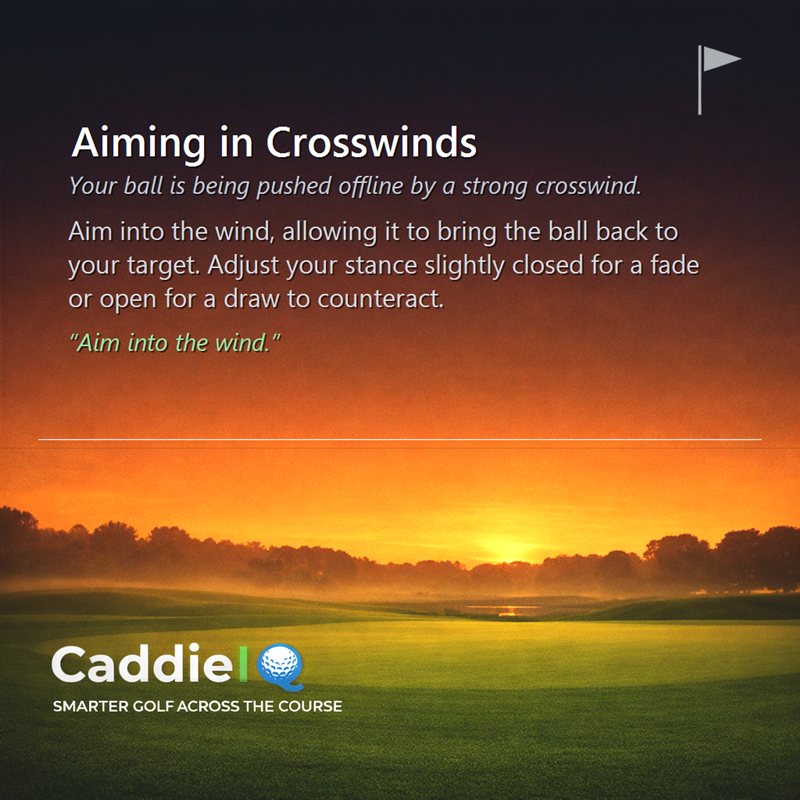
Crosswinds are a golfer's common nemesis, often turning perfectly struck shots into frustrating slices or hooks that sail far from the intended target. It's a challenge that can undermine even the best rounds. But what if you could turn this meteorological hurdle into a strategic advantage, consistently landing your ball closer to the pin?
Why Your Ball Goes Off-Line in Crosswinds
A strong crosswind exerts a consistent lateral force on your golf ball from the moment it leaves the clubface. This invisible push constantly deflects the ball from its intended flight path, leading to shots that land significantly left or right of target. The longer the ball stays airborne and the higher its trajectory, the greater the wind's influence. Without proper adjustment, even a slight breeze can turn a well-executed swing into a disappointing outcome.
The Fix: Strategic Aiming in Crosswinds
The core principle for tackling crosswinds is simple yet effective: aim into the wind. This allows the prevailing force to naturally push your ball back towards your desired target. Here's a step-by-step approach to master this technique:
- Step 1: Assess the Wind Accurately. Before every shot, determine the wind's direction and strength. Look for flags, trees, grass movement, or toss a pinch of grass into the air. Pay attention to how the wind feels on your face. Remember, wind at ground level can differ from wind at tree height.
- Step 2: Aim into the Wind. This is your primary adjustment. If the wind is blowing from left to right, aim to the left of your target. If it's blowing from right to left, aim to the right. The amount you aim off-target will depend on the wind's strength and the distance of your shot. For a moderate wind on a mid-iron, you might aim one or two metres off. In a strong gust with a driver, it could be significantly more – perhaps even aiming for a different bunker or tree line entirely.
- Step 3: Adjust Your Stance (Advanced). While aiming into the wind is key, you can further refine your shot by subtly adjusting your stance.
- For a Fade (when wind is left-to-right): Slightly close your stance (right foot slightly back for a right-handed golfer). This encourages a slight fade, which can help 'hold' the ball against the wind or even use the wind to enhance the fade if you're trying to work the ball into a specific pin position.
- For a Draw (when wind is right-to-left): Slightly open your stance (left foot slightly back for a right-handed golfer). This promotes a draw, which can be useful for fighting a strong wind or shaping the ball to your advantage.
- Step 4: Consider Club Selection. Wind, especially a headwind or strong crosswind, will reduce your effective distance. Often, you'll need to take one or even two clubs more than you normally would for the same distance. A lower trajectory shot will also be less affected by the wind, so consider a club with less loft if appropriate.
- Step 5: Control Ball Flight. When possible, try to hit a lower, more penetrating shot. A lower trajectory reduces the time the ball spends in the air, thereby minimising the wind's opportunity to push it offline. Focus on a smooth, controlled swing rather than trying to overpower the ball, which can lead to excessive spin and a higher flight.
Practical Drill: The "Wind Target" Practice
To ingrain this skill, head to the practice range on a windy day. Set up two alignment sticks or towels: one for your actual target, and another significantly to the left or right, representing your 'aiming point' into the wind. Hit shots, focusing solely on hitting your aiming point, and observe how the wind brings the ball back towards your true target. Experiment with different amounts of aim, club selections, and stance adjustments. This visual feedback is invaluable for developing your wind game.
Conquer the Wind, Conquer the Course
Mastering crosswinds takes consistent practice and a keen understanding of how atmospheric conditions affect ball flight. By strategically aiming into the wind, making subtle stance adjustments, and controlling your ball flight, you'll gain a significant edge over your playing partners and the elements. For real-time assistance with course conditions, including wind direction and strength, remember CaddieIQ can be your intelligent on-course companion, providing data-driven insights to help you make smarter decisions. Embrace the wind; don't fear it!
Related tips
Get this kind of advice on every shot
CaddieIQ is your free AI golf caddie - instant club & shot advice, swing fixes and a daily tip.
Try CaddieIQ free