Master Proximity: Get Your Golf Shots Closer to the Pin
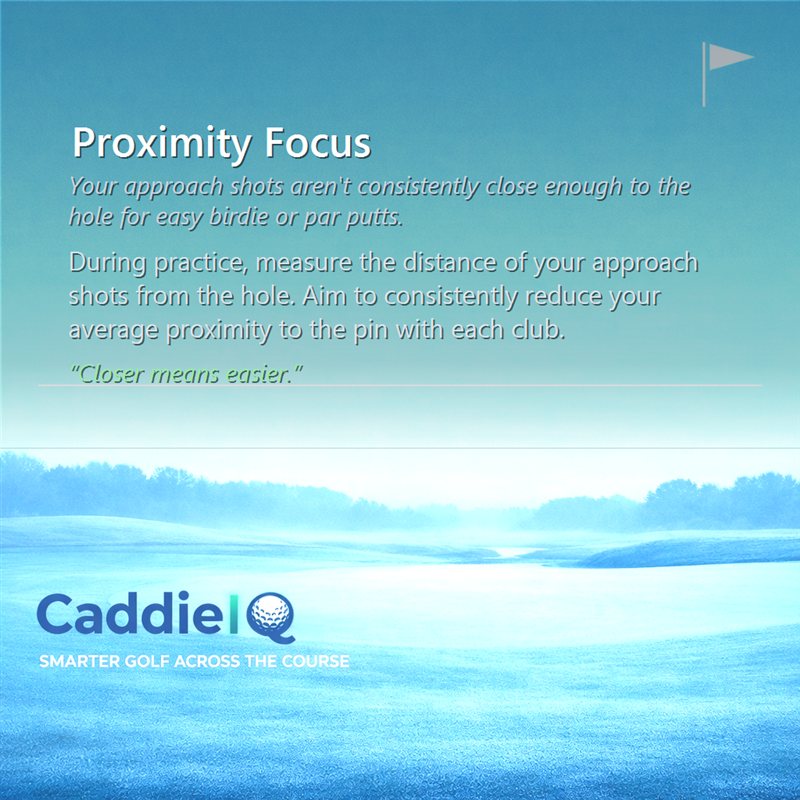
Every golfer dreams of tap-in birdies and stress-free pars. Yet, for many, approach shots consistently leave them with challenging putts, turning potential birdies into bogeys. The secret to lower scores often isn't a miraculous swing overhaul, but a sharper "Proximity Focus" – a deliberate effort to get your ball closer to the hole on every approach.
Why Your Approach Shots Aren't Close Enough
Inconsistent proximity to the pin stems from several common pitfalls:
- Lack of Specific Aim: Are you truly aiming for a 5-metre radius around the pin, or just 'at the green'? Without a precise target, your brain and body lack the necessary input for accuracy.
- Over-reliance on Feel: While feel is crucial, it must be informed by data. Guessing your carry distances for each club, rather than knowing them, leads to costly errors.
- Ignoring Feedback: If you don't measure how far off you actually are in practice, you can't learn. Without objective data, improvement becomes guesswork.
- Swing Thought Overload: Focusing too much on intricate swing mechanics during an approach shot can distract from the primary goal: getting the ball close.
The Fix: Master Your Proximity to the Pin
Improving your proximity is a systematic process, not a quick fix. Here’s how to implement "Proximity Focus" effectively:
- Measure Everything: This is the fundamental step. After every approach shot in practice, walk to the hole and measure (or pace out) your distance from the pin. Use a laser rangefinder for precise data. Record these measurements.
- Set Realistic Targets: Don't just aim for the hole. Aim for a specific, achievable radius. For example, "I want 80% of my 7-iron shots from 150 yards to land within 20 feet (6 metres) of the pin." As you improve, gradually shrink this radius.
- Understand Your Carry Distances: Knowing your precise carry distance for each club – how far the ball flies in the air before landing – is paramount. This isn't just about total distance, which includes roll. Tools like CaddieIQ can help you track and analyse your shot data, giving you invaluable insights into your true club distances and dispersion patterns, allowing you to make smarter club choices on the course.
- Vary Your Practice: Don't just hit from one flat spot. Practise approach shots from different distances, lies (uphill, downhill, sidehill), and simulated course conditions. This prepares you for the realities of the golf course.
- Focus on Outcome, Not Just Swing: While good mechanics are vital, consciously think "closer means easier" before each shot. Your primary goal is getting the ball into that manageable putting zone, reducing the pressure on your short game.
The Proximity Challenge Drill
This drill will give you immediate, quantifiable feedback on your proximity control:
- Grab 9 golf balls.
- Choose three different approach shot distances (e.g., 80 yards, 120 yards, 150 yards).
- For the first distance, hit three balls towards your target. After hitting all three, measure the proximity of each ball to the hole. Record these distances and calculate the average for that distance.
- Repeat this process for the other two distances.
- Total your average proximity for all nine balls. This is your baseline score.
The goal for your next practice session is to reduce this total average. This drill forces you to focus on precision, provides objective feedback, and makes your practice sessions more engaging and purposeful.
By consistently applying "Proximity Focus" in your practice, you'll see a dramatic improvement in your approach shot accuracy. Those challenging 25-foot putts will become rare, replaced by routine 10-footers, leading to more birdies, more pars, and ultimately, lower scores. Remember: closer truly does mean easier.
Related tips
Get this kind of advice on every shot
CaddieIQ is your free AI golf caddie - instant club & shot advice, swing fixes and a daily tip.
Try CaddieIQ free