Improve Your Golf Game: Essential Stat Tracking Basics
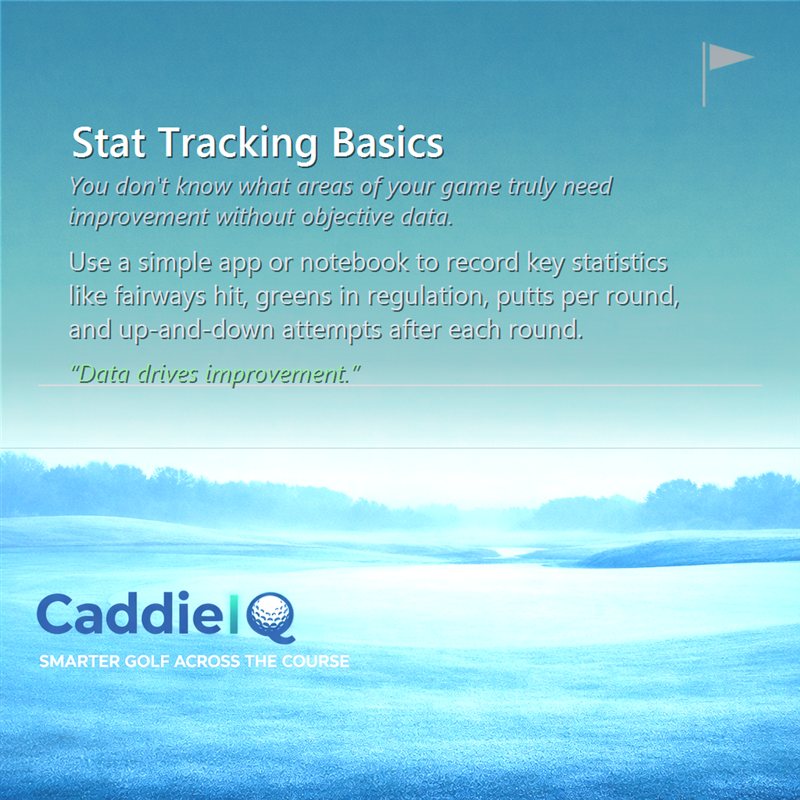
Are you tired of hitting the golf course, feeling like you're spinning your wheels with your game? Do you spend hours on the driving range, only to see minimal improvement where it truly counts – on your scorecard? Many golfers find themselves in this frustrating cycle, often because they're guessing what to practise. The secret to unlocking genuine progress isn't more practice, but smarter, more targeted practice. And that starts with objective data.
Without objective data, you're essentially flying blind. Most golfers base their practice regimen on recent bad shots, a general "feeling" about their swing, or popular tips they've seen online. While these can offer temporary fixes, they rarely address the fundamental weaknesses in your game. For instance, you might think your driving is the problem because you hooked one out of bounds on the 18th, but your stats could reveal that your short game is consistently costing you more strokes. Relying on subjective feelings leads to inefficient practice, wasted time, and ultimately, slower improvement. To truly understand what areas of your game demand attention, you need to look at the numbers.
The Fix: Simple Stat Tracking for Real Progress
Implementing a basic stat-tracking system is simpler than you might think and incredibly powerful. Here’s how to start:
Choose Your Method
Whether you opt for a simple notebook or a dedicated golf app, consistency is key. While a simple notebook works, dedicated apps like CaddieIQ streamline the process, often providing visualisations and deeper insights automatically. Pick a method you’ll stick with after every round.
Key Statistics to Track
Focus on these fundamental metrics to gain a clear picture of your performance:
- Fairways Hit: Record whether your tee shot landed in the fairway (F) or missed left (ML), right (MR), or short/long (MS/MLo). Calculate your percentage.
- Greens in Regulation (GIR): Did your ball land on the green in two shots on a par 4, one on a par 3, or three on a par 5? Mark Y/N. Calculate your percentage.
- Putts per Round: Simply count your total putts for the round. You can also track putts per hole for more granular data.
- Up-and-Down Attempts (Scrambling): When you miss a GIR, do you get the ball into the hole in two more shots (e.g., chip and one putt)? Mark Y/N. Calculate your percentage.
- Sand Saves (Optional): Similar to up-and-down, but specifically from a greenside bunker.
Analyse and Act
Once you've tracked several rounds, look for patterns. Is your GIR low? If so, is it due to poor driving leaving you in difficult positions, or are your approach shots consistently off? Are you three-putting too often, indicating a need for putting distance control? Your data will highlight your true strengths and weaknesses, allowing you to:
- Tailor Your Practice: Stop blindly hitting balls. If your stats show a low GIR due to poor iron play from 150 yards, dedicate specific practice time to that exact distance.
- Set Realistic Goals: Use your current percentages to set achievable targets for improvement.
- Monitor Progress: See tangible evidence of your hard work paying off as your statistics improve.
Drill: The Targeted Practice Challenge
Based on your stat tracking, identify your top two areas for improvement. For example, if your putting average is high and your up-and-down percentage is low, design a practice session around these. Dedicate 30 minutes to putting drills focusing on distance control from 15-20 feet, then 30 minutes to chipping drills where you aim to get the ball within a 3-foot circle from various lies around the green. Track your success during these drills. This direct link between data and practice ensures every minute you spend improving is effective.
Embracing stat tracking isn't about becoming a golf analyst; it's about becoming a smarter golfer. The objective truth revealed by your numbers will cut through the guesswork, transforming your practice and accelerating your journey to lower scores. Remember: data drives improvement. Start tracking today and unlock your true potential on the course.
Related tips
Get this kind of advice on every shot
CaddieIQ is your free AI golf caddie - instant club & shot advice, swing fixes and a daily tip.
Try CaddieIQ free