Mastering Free Relief from Ground Under Repair (GUR)
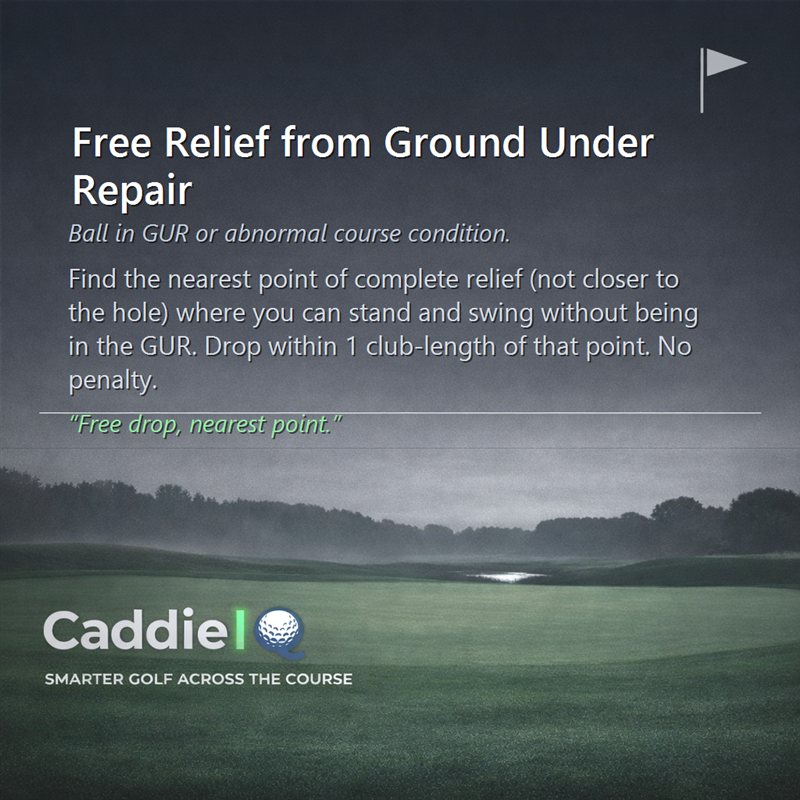
Imagine hitting a perfect drive, only to find your ball nestled in an area of churned-up turf or a freshly dug trench. Frustrating, right? While it feels like bad luck, the Rules of Golf often provide a silver lining in such situations: free relief from Ground Under Repair (GUR) and other abnormal course conditions. Knowing how to correctly apply this rule can save you strokes and keep your round fair.
Understanding Ground Under Repair (GUR)
GUR refers to any part of the course that the Committee deems to be abnormal. This typically includes areas marked by white lines, stakes, or signs, but it can also encompass obviously damaged areas like drainage ditches, casual water, or holes made by greenkeepers. The key is that these are conditions beyond the normal hazards of the game, and the rules are designed to prevent you from being unfairly penalised.
The Step-by-Step Fix: How to Take Free Relief
When your ball lies in, or is interfered with by, GUR – or if your stance or swing is impacted by it – you are entitled to free relief. Here's how to do it correctly:
-
Identify the Nearest Point of Complete Relief (NPCR): This is the most crucial step. The NPCR is the spot, not closer to the hole, where the GUR no longer interferes with your ball's position, your stance, or the area of your intended swing. It must be a point on the course where you can play your next stroke without any interference from the GUR.
-
Measure Your Drop Zone: Once you've established your NPCR, you have a one club-length relief area from that point. Your club-length is measured using the longest club in your bag, other than your putter. The ball must be dropped within this one club-length area.
-
Execute the Drop: Stand upright and drop the ball from knee height. The ball must land in and come to rest within your one club-length relief area, and not closer to the hole than your NPCR. If it rolls out of this area, or closer to the hole, you must re-drop. If it rolls out again, you place the ball where it first landed on the second drop.
-
Play On: Once the ball is correctly dropped and at rest, you play your next shot with no penalty.
Practice Makes Perfect: A Simple Drill
Understanding the rule is one thing; applying it under pressure is another. Here’s a simple drill you can do:
- During a practice round, or even just walking the course, identify areas that could be GUR (e.g., maintenance areas, temporary ground damage).
- Imagine your ball has landed there.
- Walk through the process: pinpoint the NPCR, measure your one club-length, and visualise the drop.
- This mental rehearsal will build your confidence and speed up your decision-making when it truly matters.
Maximise Your Advantage
Knowing and correctly applying rules like free relief from GUR isn't just about avoiding penalties; it's about playing fairly and strategically. Don't leave strokes on the course by being unsure of the rules. For more rules insights and real-time on-course assistance, consider downloading the CaddieIQ app – your free AI golf caddie. It's designed to help you navigate the course, including those tricky rules situations, with confidence.
Related tips
Get this kind of advice on every shot
CaddieIQ is your free AI golf caddie - instant club & shot advice, swing fixes and a daily tip.
Try CaddieIQ free