Stay Calm, Play Smart: Your Guide to Stroke Play Patience
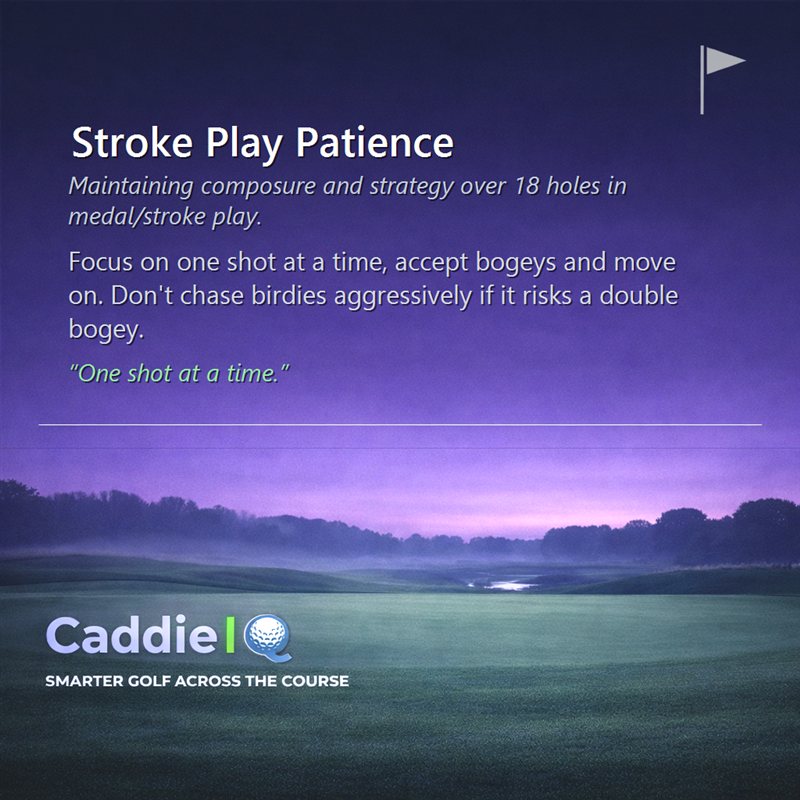
Stroke play, often referred to as medal play, is a true test of a golfer’s skill, strategy, and most importantly, their patience. Unlike match play, every single stroke counts over all 18 holes, making maintaining composure and a clear mind paramount. It's easy to let one errant shot unravel your entire round, but with the right approach, you can transform frustration into consistent scoring.
Why Patience is Often Lost in Stroke Play
The cumulative nature of stroke play creates a unique pressure. Golfers often fall into common traps:
- Dwelling on Mistakes: A poor tee shot or a missed short putt can stick in your mind, affecting subsequent swings.
- Chasing the Score: If you're "up" after a few good holes, the pressure to maintain it builds. If you're "down," the urge to aggressively chase birdies to get strokes back can lead to costly errors.
- Fatigue and Focus: Maintaining peak concentration over four hours is challenging. Mental fatigue can lead to lapses in judgment and technique.
This cycle of dwelling and aggressive chasing often results in compounding errors, turning a manageable bogey into a double bogey or worse.
The Fix: Cultivating Stroke Play Patience
1. Embrace the "One Shot at a Time" Mindset
This isn't just a cliché; it's a fundamental strategy. Before each shot, commit 100% of your focus to the task at hand – the target, the club, the swing. Once the ball is struck, regardless of the outcome, immediately release it. Do not replay it in your head. Walk to your next shot with a clean slate, ready to apply the same singular focus.
2. Accept the Inevitable Bogey (or Worse)
Even professional golfers make bogeys. It’s part of the game. The key is to accept them gracefully and move on. If you find yourself in a difficult position – in the rough, behind a tree, or facing a tricky chip – assess the risk. Is trying to pull off a heroic shot worth risking a double bogey or more? Often, the smarter play is to take your medicine, punch out, pitch to the green, and secure a bogey. A bogey is almost always better than a double or triple.
3. Strategic Birdie Hunting, Not Reckless Aggression
There’s a time and place for aggression. If you have a clear, safe shot at the flag, go for it. But if the pin is tucked behind a bunker, or you’re facing a long, risky carry, reconsider. Prioritise hitting the green in regulation, or at least a safe spot from which to chip and putt for par or a straightforward bogey. Don't chase birdies aggressively if it risks a double bogey – the math rarely adds up favourably. Utilise tools like CaddieIQ to help with pre-shot planning and course management, giving you confidence in your shot selection based on real-time data and optimal strategy.
4. Implement a Consistent Pre-Shot Routine
A solid pre-shot routine acts as a mental reset switch. It helps you clear your mind of the previous shot and focus entirely on the current one. This routine should be consistent for every shot – tee shot, approach, chip, and putt. It grounds you in the present moment, fostering patience and deliberate action.
Drill: The "Damage Limitation" Round
Next time you're on the course, play a practice round with a specific goal: "damage limitation." Your objective isn't to shoot your best score, but to avoid any double bogeys or worse. If you hit a bad shot, your immediate thought should be: "How do I make a bogey from here?" Not "How do I save par?" This drill forces you to think strategically, accept your misses, and prioritise limiting the damage on any given hole. You'll be surprised how often this mindset leads to better overall scores.
Cultivating patience in stroke play is a skill, just like perfecting your swing. It takes practice, self-awareness, and a commitment to strategic thinking over ego. Embrace the journey, focus on one shot at a time, and watch your scores steadily improve.
Related tips
Get this kind of advice on every shot
CaddieIQ is your free AI golf caddie - instant club & shot advice, swing fixes and a daily tip.
Try CaddieIQ free