Mastering Golf: How to Read Pin Positions
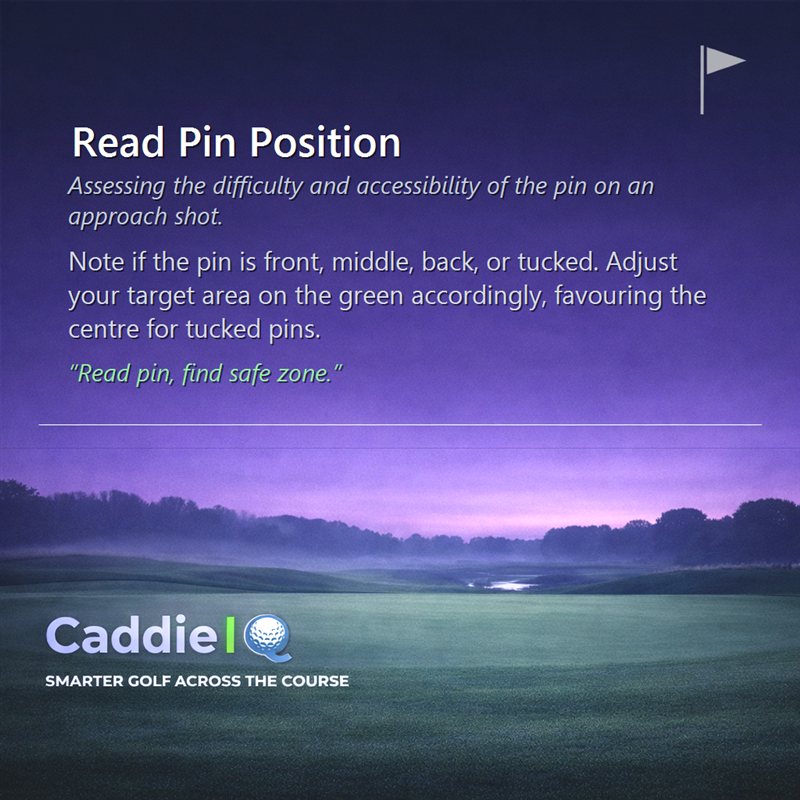
Understanding where the flagstick is placed on the green, known as the pin position, is one of golf's most overlooked yet critical skills. It's not enough just to hit the green; knowing how to attack the pin can drastically improve your scoring, reduce bogeys, and transform your course management from hopeful to strategic.
Why Pin Position Dictates Your Approach
Many golfers simply aim for the flag, regardless of its location. This often leads to unnecessary trouble. A poorly considered approach shot can leave you with a treacherous chip, a long, breaking putt, or worse, finding a bunker or water. The pin's placement on the green defines the risk and reward of your shot, influencing club selection, shot shape, and ultimately, your target area.
The Fix: Reading Pins Like a Tour Pro
Becoming adept at reading pin positions involves assessing the green's contours, potential hazards, and the pin's distance from the edges. Here’s how to adjust your target area:
- Front Pin: When the pin is positioned near the front edge of the green, often close to a bunker, the safest play is to aim slightly short of the flag or at the very front of the green, allowing for a short chip or an uphill putt. Avoid going long, as this can leave you with a difficult downhill chip or a fast putt.
- Middle Pin: This is generally the most straightforward. With a generous amount of green in front and behind, you can often aim directly at the flag, confident that any slight miss will still leave you on the green with a reasonable putt.
- Back Pin: When the pin is at the back of the green, ensure you carry your shot far enough. Aiming for the middle or just past the pin is usually wise. Being short-sided on a back pin can leave you with a long, challenging putt or a delicate chip over a bunker.
- Tucked Pin (Corners or Near Hazards): These are the trickiest. A pin tucked deep into a corner, behind a bunker, or near the water demands the most conservative approach. Your 'safe zone' here is often the absolute centre of the green, even if it's 20 feet from the flag. Prioritise hitting the green in a safe spot over attacking a high-risk flag. A two-putt par is far better than a costly bogey or worse.
Always factor in green slopes, wind conditions, and your lie. A good rule of thumb is: if in doubt, aim for the middle of the green. This strategy minimises risk and maximises your chances of a two-putt par.
Practice Drill: The 'Safe Zone' Game
On the practice green, imagine various pin positions. For each, identify your personal 'safe zone' – the largest area on the green where you'd be happy to land your ball, ensuring an easy two-putt. Then, pick a target within that zone and practice hitting to it. Repeat this process for front, middle, back, and especially tucked pin scenarios. This sharpens your decision-making and shot execution.
Mastering the art of reading pin positions will undoubtedly shave strokes off your game. It’s about playing smarter, not just harder. Tools like CaddieIQ can further enhance your course management by providing intelligent insights for every shot, helping you find that perfect 'safe zone' every time you step onto the course.
Related tips
Get this kind of advice on every shot
CaddieIQ is your free AI golf caddie - instant club & shot advice, swing fixes and a daily tip.
Try CaddieIQ free