Mastering Golf Backspin: Stop Your Ball on a Dime
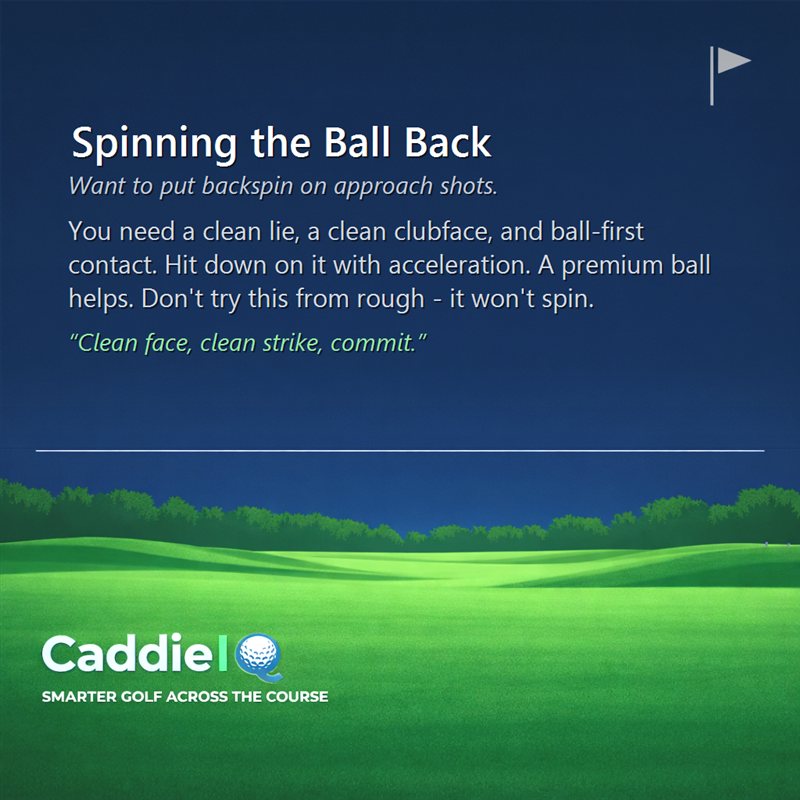
Imagine hitting an approach shot that lands softly, takes one hop, and then checks up, perhaps even spinning back towards the flag. This isn't just for the pros; with the right technique, you too can master the art of generating significant backspin on your golf shots. It's a game-changer for attacking pins and saving strokes.
Understanding Backspin: The Science of Stopping Power
Backspin is created by friction between the clubface and the ball. When you strike the ball correctly, the grooves on your club impart a rapid rotation, causing the ball to 'grab' when it lands. The absence of backspin often comes down to poor contact, turf interference, or a dirty clubface. Simply put, anything that reduces that critical friction will kill your spin.
The Fix: Your Step-by-Step Guide to Generating Backspin
1. The Perfect Lie is Paramount
Your ball must be sitting cleanly on the turf, ideally on a tightly mown fairway or a firm lie. Trying to generate backspin from the rough is a fool's errand. The grass between the clubface and the ball will prevent the necessary friction, resulting in a 'flier' with little to no spin.
2. Immaculate Clubface
Just as important as the lie is a spotless clubface. Dirt, grass, or sand in the grooves dramatically reduces friction. Before every approach shot, take a moment to clean your clubface thoroughly. A wire brush and a damp towel are your best friends here.
3. Ball-First Contact is Non-Negotiable
This is the cornerstone of backspin. You must strike the ball before you touch the turf. An 'ascending blow' or hitting behind the ball will lead to a thin shot or a fat shot, neither of which will generate spin. Focus on driving the leading edge of the club into the back of the ball, then taking a shallow divot after impact.
4. Hit Down with Authority and Acceleration
Contrary to what some might think, you don't 'scoop' the ball to get it in the air. To generate backspin, you need a descending blow. Think about compressing the ball against the turf. This requires a stable lower body and an aggressive, accelerating swing through impact. Don't decelerate; commit to the shot.
5. Equipment Matters (to a degree)
While technique is primary, a premium, multi-layer golf ball designed for spin will certainly help. These balls have softer covers that grip the clubface better. Modern wedges with sharp, clean grooves also contribute significantly. Generally, higher lofted clubs (wedges, short irons) are easier to spin due to their inherent design and the angle of attack they encourage.
Practice Drill: The Towel Test
To hone your ball-first contact, try this simple drill:
- Place a small towel or headcover about 6-8 inches behind your golf ball.
- Your goal is to hit the ball cleanly without touching the towel.
- This forces you to focus on ball-first contact and a descending blow.
- Start with half swings and gradually increase to full swings once you're consistently avoiding the towel. The immediate feedback will help you refine your strike.
Conclusion: Spin It to Win It
Mastering backspin takes practice and dedication, but the rewards are immense. The ability to control your ball on the green will transform your short game and boost your confidence. Remember the mantra: clean lie, clean clubface, clean strike, commit. And for personalised insights into your swing mechanics and shot data, consider using CaddieIQ – your free AI golf caddie. Get out there and start spinning it back!
Related tips
Get this kind of advice on every shot
CaddieIQ is your free AI golf caddie - instant club & shot advice, swing fixes and a daily tip.
Try CaddieIQ free