Mastering Cold Weather Golf: Essential Tips for 10°C & Below
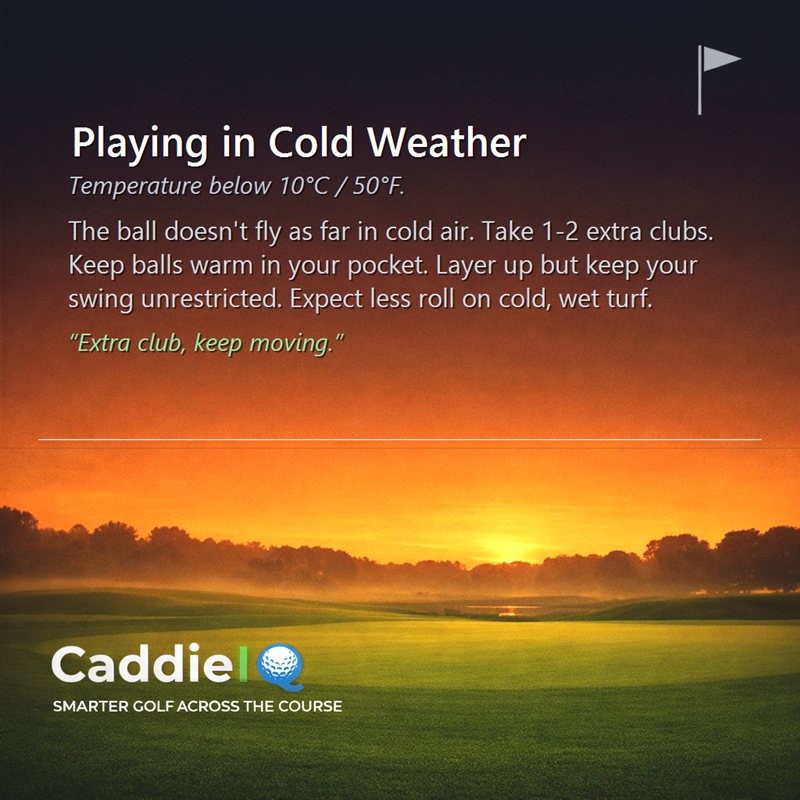
Understanding the Cold Weather Impact on Your Game
When the mercury drops below 10°C (50°F), many golfers pack away their clubs. But with the right strategy, you can still enjoy the game and even improve your scores. Playing in cold conditions presents unique challenges that affect both your equipment and your body.
The primary reason your golf ball loses distance in cold air is simple physics. Cold air is denser than warm air, creating more drag and reducing the ball's aerodynamic efficiency. This means your shots will fly shorter, often by 5-10%. Additionally, a cold golf ball loses some of its elasticity, leading to less compression at impact and further distance loss. Your body's flexibility and muscle response are also reduced in the cold, potentially affecting swing speed and fluidity. The ground itself changes; cold, often damp or frozen turf offers minimal roll, causing shots to stop much quicker than in warmer conditions.
Your Cold Weather Golf Strategy: The Fix
1. Adjust Your Club Selection for Distance Loss
This is arguably the most critical adjustment. Cold, dense air increases drag on the golf ball, significantly reducing carry distance. Expect your shots to fly 5-10% shorter than usual. This means taking at least one, often two, extra clubs for most shots. For example, if you'd normally hit a 7-iron, consider a 6 or even 5-iron. Don't be afraid to overclub; a slightly long shot is often better than a short one in these conditions, especially into greens.
2. Keep Your Golf Balls Warm
A cold golf ball loses elasticity, resulting in less compression at impact and further distance loss. Keep your golf balls in an inside pocket, close to your body, to maintain their temperature. Rotate through a few balls to ensure you're always playing with one that's as warm as possible. Avoid leaving balls exposed on the cart or in your bag where they will quickly chill.
3. Layer Up Smartly for Warmth and Flexibility
Staying warm is paramount, but not at the expense of your swing. Opt for multiple thin layers rather than one bulky one. A thermal base layer, a fleece or mid-layer, and a waterproof/windproof outer shell are ideal. Ensure your layers allow for full rotation and unrestricted movement, especially around your shoulders and arms. A warm hat and thermal gloves (worn between shots) are also essential to maintain dexterity.
4. Account for Reduced Roll on Cold Turf
Cold, often wet or even slightly frozen turf offers very little, if any, forward roll. Shots that would normally run out significantly will stop much quicker. This reinforces the need for extra club selection, particularly on approach shots into greens. Focus on carrying the ball closer to your target rather than relying on bounce and roll.
5. Prioritise a Thorough Warm-up
Cold muscles are stiff muscles, increasing the risk of injury and hindering your swing. Dedicate extra time to a dynamic warm-up before your round. Focus on gentle stretches for your shoulders, back, and hips. Even simple arm circles and torso twists can make a significant difference in preparing your body for the demands of the golf swing.
Cold Weather Swing Thought & Drill
Your key swing thought should be: "Extra club, keep moving."
The "Rhythm & Connection" Drill:
Before you even hit a ball, take a few practice swings with an extra club in your hand – perhaps a 5-iron when you'd typically hit a 7-iron. Focus purely on a smooth, connected swing, feeling the weight of the club. Don't try to "muscle" the ball; instead, concentrate on making good contact and maintaining your natural rhythm. This helps your body adjust to the added bulk of clothing and the slight stiffness, encouraging a fluid motion rather than a jerky, power-driven one.
Conclusion: Embrace the Winter Challenge
Playing golf in cold weather doesn't have to be a deterrent. By understanding its effects and implementing these practical adjustments, you can continue to enjoy the game and even maintain your scoring. Remember to adjust your club selection, keep balls warm, layer smartly, and account for less roll. For real-time, data-driven insights on conditions and club recommendations, consider using CaddieIQ – your free AI golf caddie app – to fine-tune your strategy on every hole. Don't let the chill keep you off the course; embrace the challenge and play your best, whatever the forecast!
Related tips
Get this kind of advice on every shot
CaddieIQ is your free AI golf caddie - instant club & shot advice, swing fixes and a daily tip.
Try CaddieIQ free