Master the Low Running Hook in Golf: Your Ultimate Guide
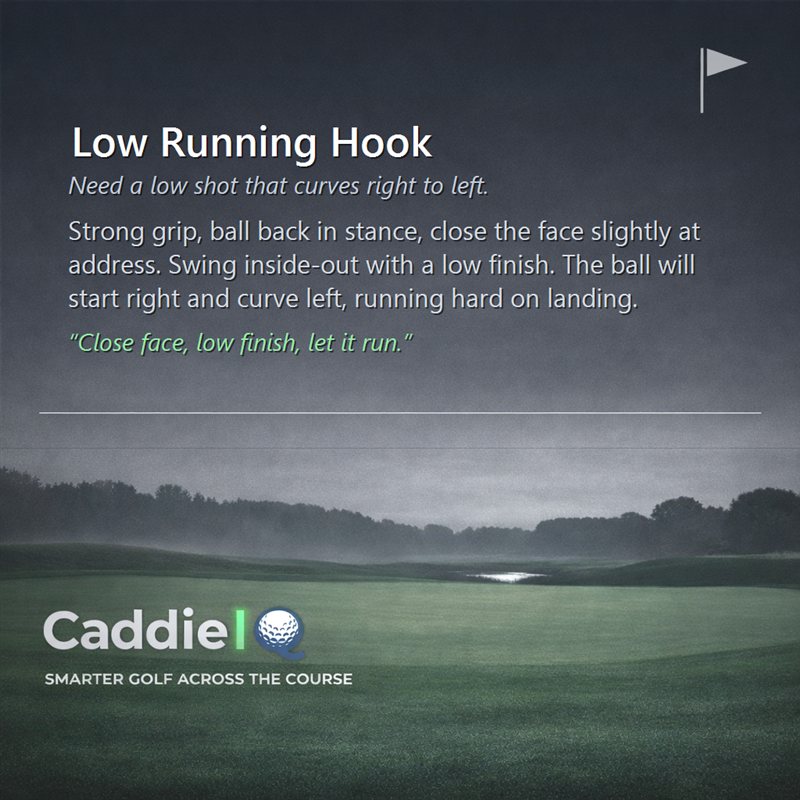
Ever found yourself on the course, facing a tight dogleg left, a fierce headwind, or needing to punch a shot low under overhanging tree branches? A standard high, soft shot simply won't cut it. What you need is a controlled, penetrating shot that starts right, hooks left, and runs hard upon landing. This is where mastering the low running hook becomes your secret weapon.
Why the Low Running Hook is Essential
The low running hook isn't just a fancy trick shot; it's a strategic asset for navigating challenging course conditions. It allows you to:
- Fight the Wind: A low trajectory is less affected by strong head or crosswinds, maintaining distance and accuracy.
- Shape Shots Around Obstacles: Ideal for working the ball around trees or other hazards.
- Maximise Roll: The low flight and hook spin ensure the ball lands softly but then runs significantly, adding valuable yards, especially on firm fairways.
- Control Spin: While it hooks, the lower trajectory often means less backspin, preventing the ball from ballooning.
The Fix: Executing the Low Running Hook
To consistently hit this vital shot, focus on these key adjustments to your setup and swing:
1. The Strong Grip
For right-handed golfers, a strong grip involves rotating your left hand slightly to the right on the club. You should be able to see two to three knuckles on your left hand, and the 'V' formed by your thumb and forefinger should point towards your right shoulder. This grip encourages the clubface to close naturally through impact, promoting the desired right-to-left ball flight.
2. Ball Position: Back in the Stance
Position the ball further back in your stance, towards your trail foot (right foot for right-handed golfers). This encourages a downward strike on the ball and naturally delofts the clubface at impact, ensuring a lower trajectory. It also helps in achieving an inside-out swing path.
3. Clubface: Slightly Closed at Address
At address, aim your clubface a few degrees closed relative to your target line. This pre-sets the club for the desired draw or hook spin. Be subtle with this adjustment – too much and you'll just pull the ball left immediately. Think of it as aiming the clubface where you want the ball to start, not where you want it to finish.
4. Swing Path: Inside-Out
The essence of the hook is an inside-out swing path. Focus on bringing the club back on an inside plane and then swinging out towards the target line through impact. Imagine you're trying to hit the inside-back quarter of the ball. This path, combined with the slightly closed clubface, creates the necessary side spin for the ball to curve right-to-left.
5. Finish: Low and Extended
After impact, keep your hands and the clubhead low, extending them down the target line. Avoid a high, wraparound finish. A low finish helps to keep the trajectory down and maintains the clubface angle, preventing it from opening too much and killing the hook. Think "chasing the ball" with your hands.
Practice Drill: The Gate & Low Finish
To ingrain these movements, try the following drill:
- The Gate: Place two alignment sticks or even two clubs on the ground, parallel to your target line. Position one just inside your ball and the other just outside, creating a narrow "gate" for your clubhead to swing through. This reinforces the inside-out path.
- Low Finish Focus: During your practice swings, consciously focus on keeping your hands low and pointing towards your target after impact. Start with half swings, feeling the ball come off low and hot, then gradually increase your swing speed as control improves.
Mastering the low running hook adds a powerful, versatile shot to your golfing repertoire. With practice, you'll gain confidence in navigating challenging lies and windy conditions, turning potential problems into scoring opportunities. For personalised feedback on your swing path and clubface control, consider using an AI golf caddie app like CaddieIQ. Embrace this shot, and watch your scores drop!
Related tips
Get this kind of advice on every shot
CaddieIQ is your free AI golf caddie - instant club & shot advice, swing fixes and a daily tip.
Try CaddieIQ free