Master the Knockdown Shot: Control Your Golf Ball Flight
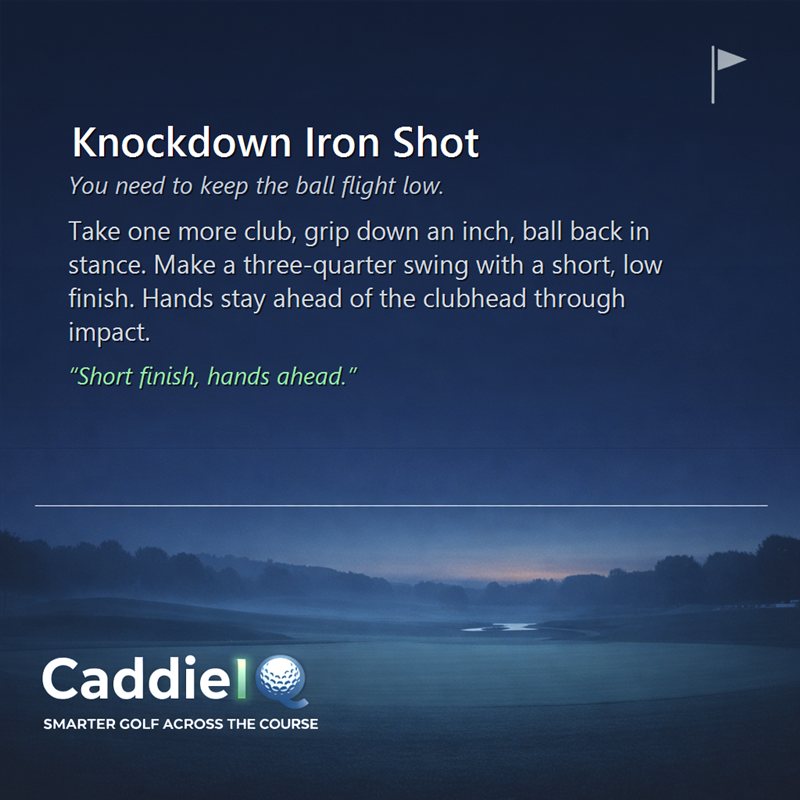
Conquer the Wind and Obstacles with a Perfect Knockdown Iron Shot
Ever found yourself facing a strong headwind, a low-hanging branch, or a tricky shot where a high-flying ball spells disaster? Mastering the knockdown iron shot is your secret weapon for navigating such challenges. This controlled, low-trajectory shot isn't just for pros; it's an essential skill for any golfer looking to improve their course management and score.
Why You Need the Knockdown Shot
The need for a knockdown shot arises when you must control the ball's flight path. A standard iron shot, with its natural loft and spin, will climb high into the air, making it susceptible to strong winds that can blow it off target or causing it to hit an obstruction like tree branches. By reducing the ball's height and spin, the knockdown shot allows you to pierce through the air or stay safely beneath obstacles, giving you greater predictability and control over your outcome.
The Fix: Your Step-by-Step Guide to a Low Ball Flight
- Club Selection: Take One More Club
Choose one more club than you normally would for the distance. For example, if it's a 7-iron shot, opt for a 6-iron. This allows you to swing easier and maintain control, naturally de-lofting the clubface for a lower flight without having to force it. - Grip Adjustment: Grip Down an Inch
Grip down an inch or two on the handle. Shortening the club slightly gives you more control over the clubhead, making it easier to deliver a consistent strike and manage the clubface through impact. It also effectively shortens the swing arc, reducing clubhead speed slightly for more control. - Ball Position: Ball Back in Stance
Move the ball back slightly in your stance, roughly in line with the centre of your chest or even a touch further back for a more aggressive knockdown. This position promotes a downward strike, reducing dynamic loft and imparting less backspin, resulting in a lower, more penetrating trajectory. - Swing Length: Make a Three-Quarter Swing
Make a compact, three-quarter backswing. Avoid a full turn, focusing instead on maintaining connection and control. This shortened swing path prevents over-swinging and helps you keep the club on plane, ensuring a solid, controlled strike. - Impact & Finish: Short, Low Finish, Hands Ahead
Through impact, ensure your hands remain significantly ahead of the clubhead. This forward shaft lean is crucial for delofting the club and compressing the ball effectively. Your follow-through should be short and low, with the club finishing around waist height or even lower. The 'Short finish, hands ahead' swing thought will help engrain this feeling, preventing the club from flipping and adding unwanted loft or spin.
Practise Drill: The 'Stop at the Belt Buckle'
To practise this crucial feeling, try the 'Stop at the Belt Buckle' drill. Hit some half-shots, focusing on stopping your follow-through with the clubhead pointing directly at your belt buckle. This forces you to keep your hands ahead and prevents a high, uncontrolled finish. Pay close attention to the sound and feel of a solid, de-lofted strike. You'll notice the ball flying lower and with a more piercing flight.
Master Your Control
Mastering the knockdown iron shot adds a vital layer of versatility to your game, transforming tricky situations into scoring opportunities. With consistent practise, you’ll gain the confidence to control your ball flight in any condition. For deeper insights and personalised guidance to refine every aspect of your game, explore CaddieIQ, your free AI golf caddie app, available at caddieiq.golf.
Related tips
Get this kind of advice on every shot
CaddieIQ is your free AI golf caddie - instant club & shot advice, swing fixes and a daily tip.
Try CaddieIQ free