Conquer Short Putt Nerves: Sink More 3-5 Footers
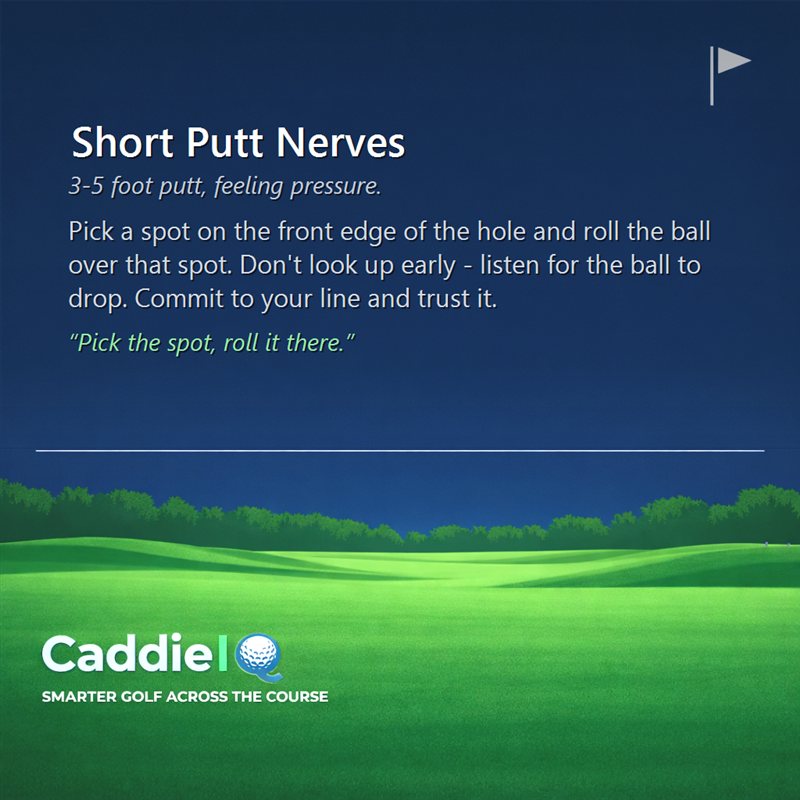
Every golfer knows the agony: standing over a crucial 3-5 foot putt, the hole seemingly shrinking, and your heart pounding. This isn't just a physical challenge; it's a mental one. Short putt nerves can turn a routine tap-in into a dreaded miss, adding strokes to your score and frustration to your round. But what if you could approach these putts with unwavering confidence? You can, by focusing on a simple, yet profoundly effective, strategy.
Why Short Putts Feel So Pressurised
That 3-5 foot putt, seemingly simple, often becomes a mental battle. The pressure builds because we expect to make them. The fear of missing, of looking foolish, or of costing ourselves a good score, can cause tension in our hands and arms, leading to a jerky stroke or pulling the putter off line. Our focus shifts from executing the putt correctly to the outcome – sinking it – which paradoxically makes it harder to achieve.
The Fix: A Step-by-Step Guide to Confident Short Putting
The key to conquering short putt nerves lies in simplifying your focus and trusting your stroke. Here’s how to implement a game-changing approach:
- 1. Commit to Your Line: Before you even address the ball, take your time to read the putt. Analyse the break, if any, and visualise the ball rolling into the hole. Once you’ve determined your line, commit to it wholeheartedly. Second-guessing yourself at address is a recipe for disaster.
- 2. Pick a Spot on the Front Edge: This is the cornerstone of the fix. Instead of looking at the entire hole, find a tiny spot – a discoloured blade of grass, a spike mark, or even an imaginary point – on the very front edge of the hole that your ball must roll over. This hyper-specific target narrows your focus and makes the putt feel less daunting.
- 3. Roll the Ball Over That Spot: Your sole swing thought should be to roll the ball directly over your chosen spot. This promotes a smooth, accelerating stroke, rather than a tentative jab. Focus on the quality of the roll, ensuring the ball leaves the putter face cleanly and on your intended line.
- 4. Don't Look Up Early – Listen for the Drop: This is critical. Many golfers peek up to see the result, pulling their head and shoulders, which can throw the putter head off line. Instead, keep your head absolutely still through impact and beyond. Trust your stroke and your chosen line. Let your ears tell you the outcome – listen for that satisfying sound of the ball dropping into the cup.
Practice Drill: The Gate Drill with a Twist
To ingrain this technique, try the following drill:
- Place two tees in the ground, just wide enough for your putter head to pass through cleanly, about 6 inches behind your ball. This helps ensure a straight back and through stroke.
- Now, pick your spot on the front edge of the hole, 3-5 feet away.
- Address the ball, focusing on rolling it through the gate of tees and directly over your chosen spot.
- Practise keeping your head down and listening for the ball to drop. Repeat this drill until the feeling of a confident, committed stroke becomes second nature.
Master Your Mind, Master Your Putts
By shifting your focus from the outcome to the precise execution of rolling the ball over a specific spot and listening for the result, you eliminate the mental clutter that causes short putt nerves. You're no longer thinking about "making the putt" but rather "executing the process." This approach builds confidence, reduces tension, and ultimately leads to sinking more of those crucial 3-5 footers. For personalised insights on your putting and overall game, consider leveraging the power of CaddieIQ, your free AI golf caddie app, to refine your approach on the greens and beyond.
Related tips
Get this kind of advice on every shot
CaddieIQ is your free AI golf caddie - instant club & shot advice, swing fixes and a daily tip.
Try CaddieIQ free