Tiny wearable sensors capture your swing and putting stroke in full motion — and coach you live through your earbuds. Studio-grade feedback, on the range or the practice green.
Each sensor is a tiny motion tracker you clip to your club, glove, or body. The CaddieIQ app fuses their data into the same metrics a £20,000 studio measures — then speaks the one thing that matters straight into your ear.
Every module is identical. Wear it on the putter grip today, the back of your hand or the small of your back tomorrow — you just tell the app where it is.
Start with one. Add more over time. Two sensors unlock full putting analysis; a full set delivers mocap-grade swing capture. Capability scales with how many you own.
No screen to stare at. Within about a second of each swing or putt, your earbuds tell you what happened — "face two degrees open", "tempo three-to-one".
Rechargeable modules run a full practice session on a charge, pair in seconds, and remember which position they belong to.
Each mode uses the sensors best placed to read it. Here's exactly what MoCaddieIQ tracks and how.
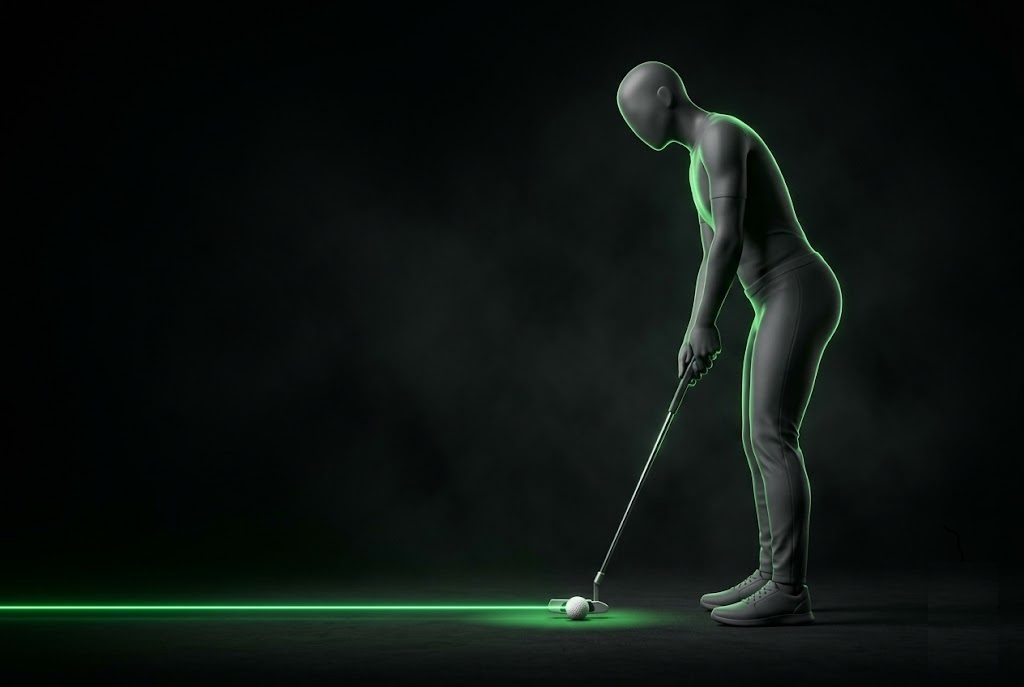
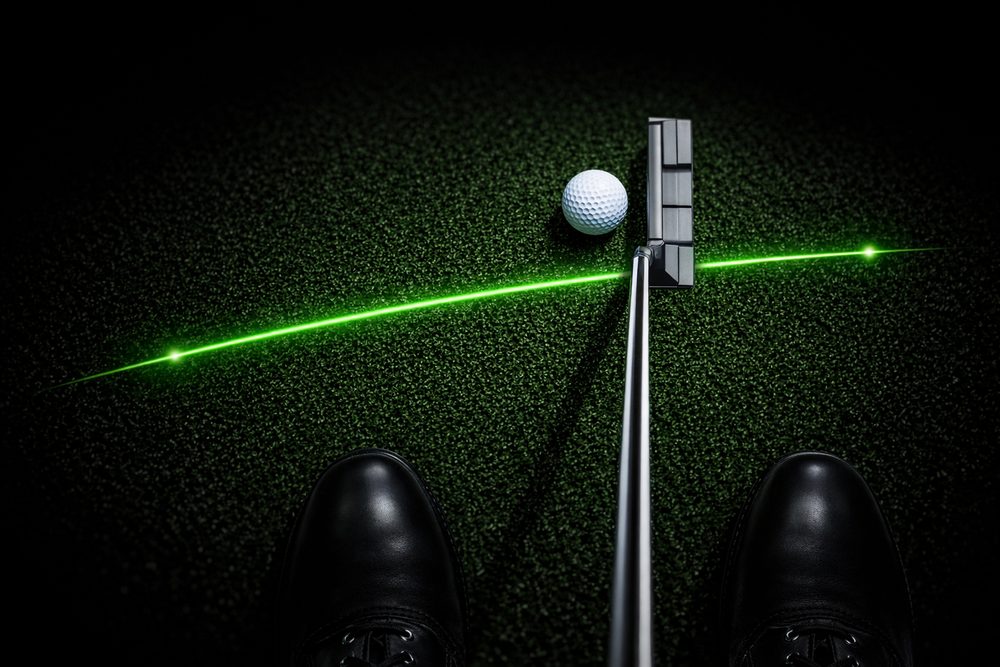
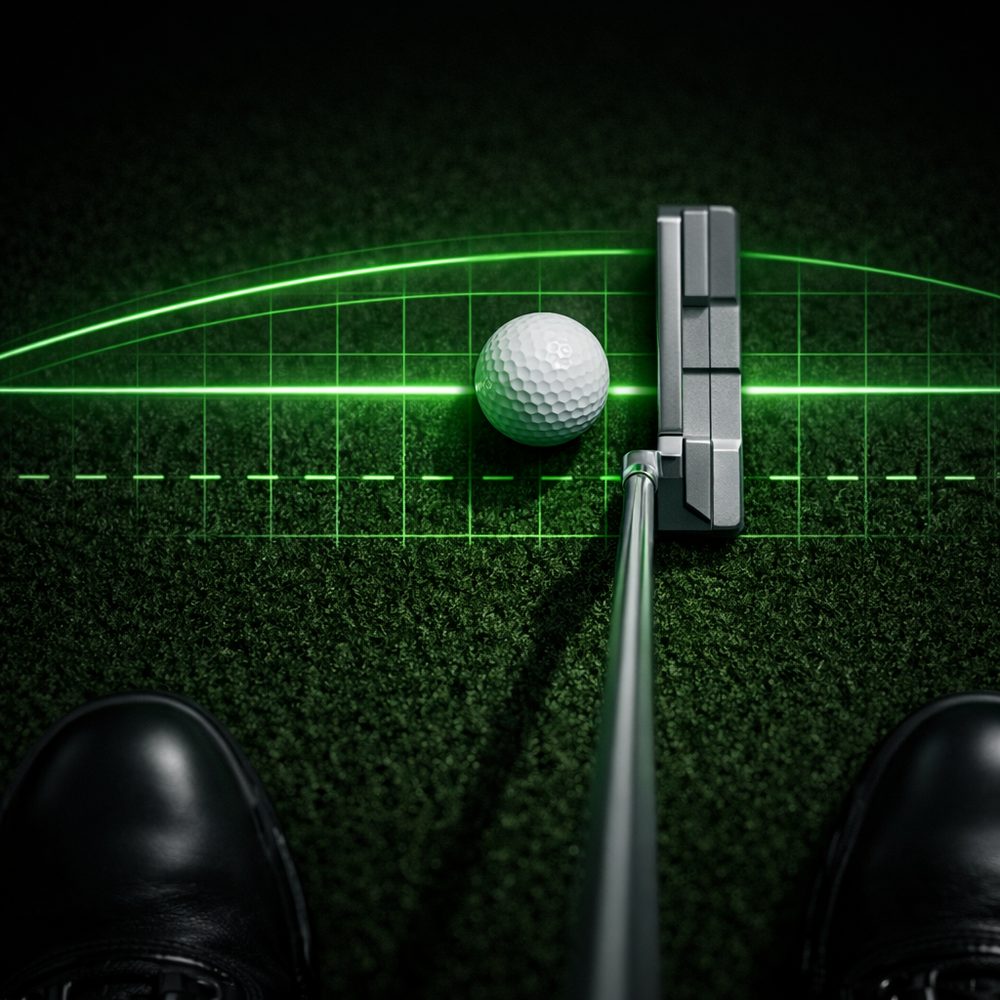
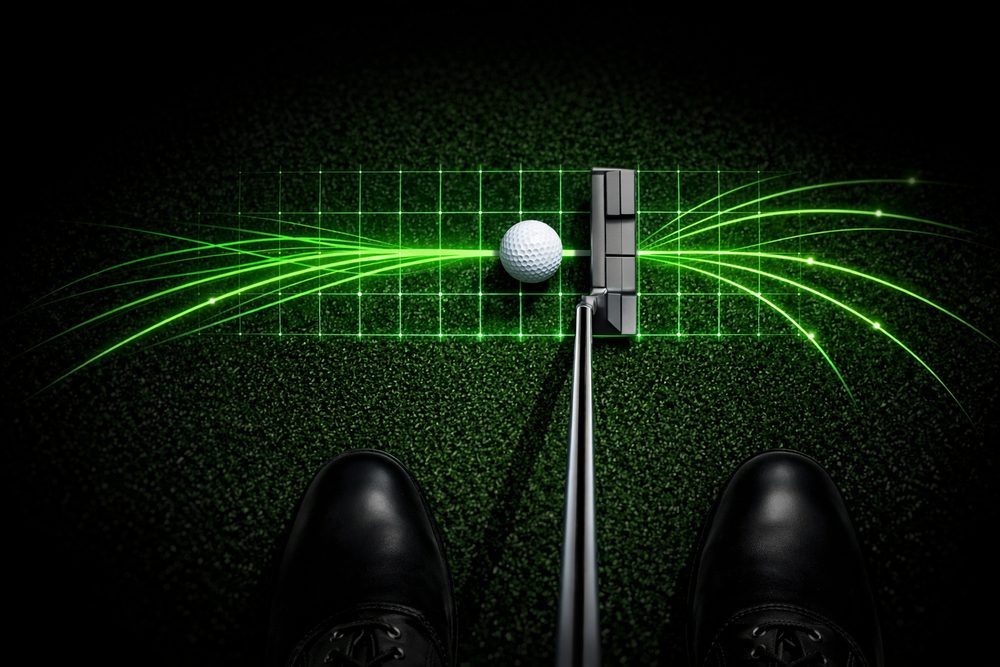
A sensor on the grip and one on the back of your hand turn your stroke into the same data a £20k putting studio gives — for a fraction of the price.

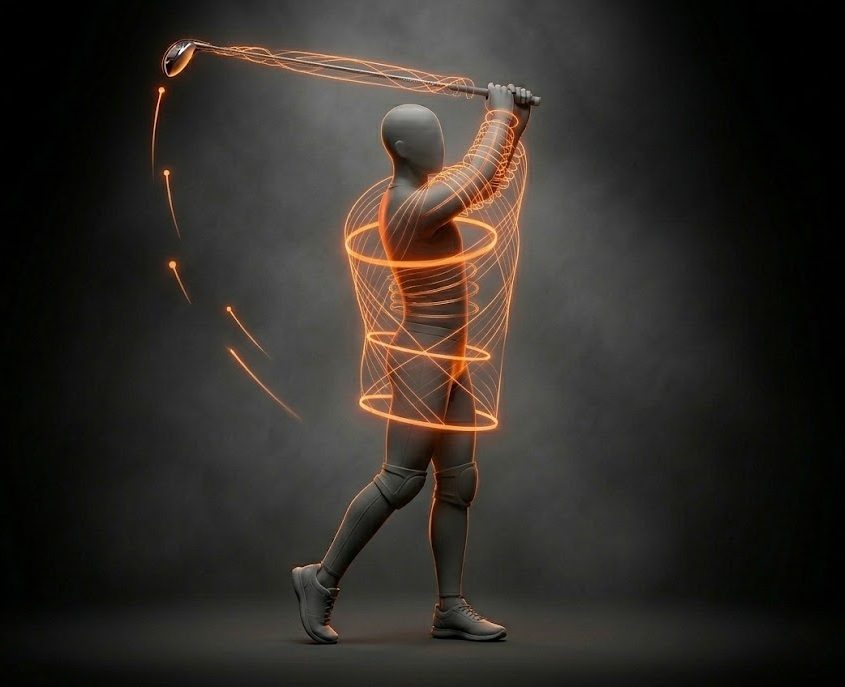
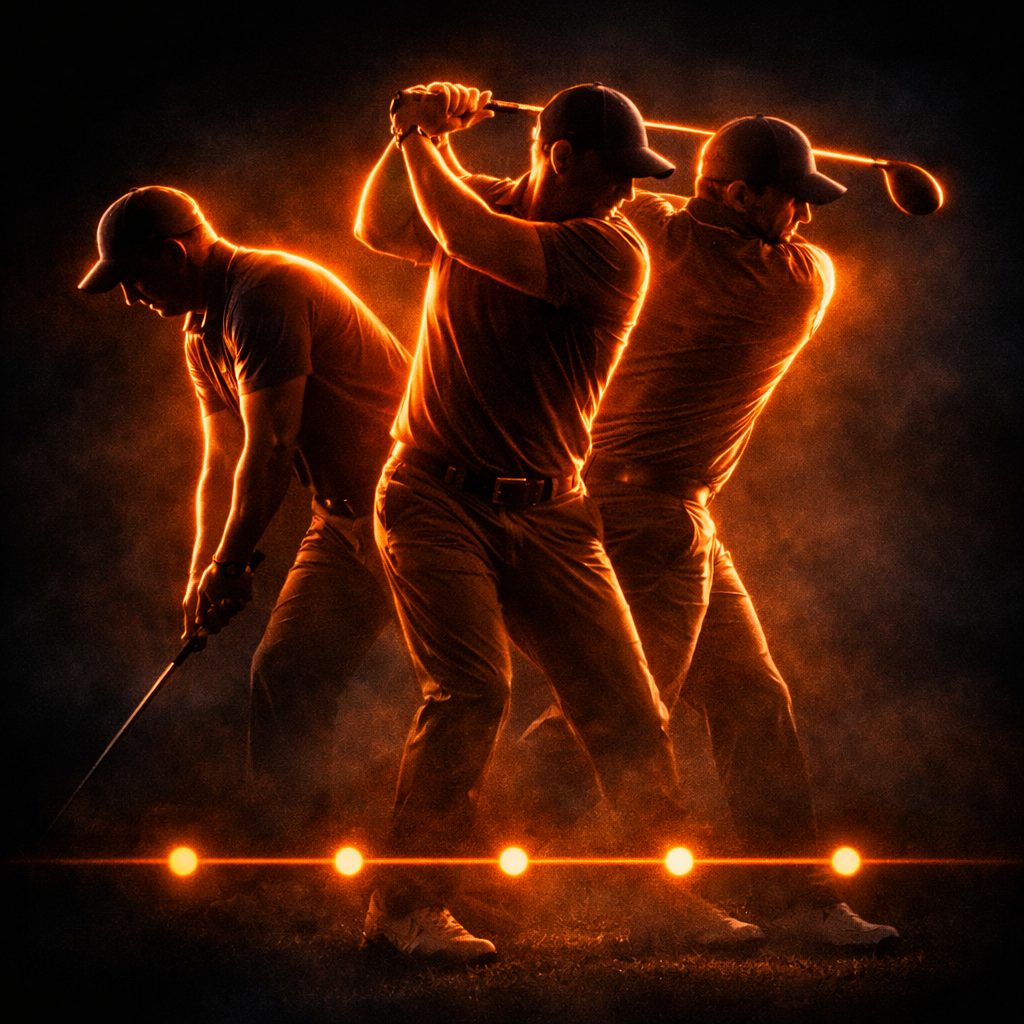
Worn across the body, the full set reconstructs your whole kinematic sequence — club, arms, and body working together.

The best players share a backswing-to-downswing rhythm of roughly 3:1. MoCaddieIQ plays a live tempo beat and tells you your exact ratio after every swing.

MoCaddieIQ checks your club and arms against your ideal shaft plane at the three moments that matter, so you groove a repeatable path — not steep, not flat.

Move slowly into a checkpoint and a tone confirms the instant you're in the correct position — silence means you're off. Pure feel training, no screen.

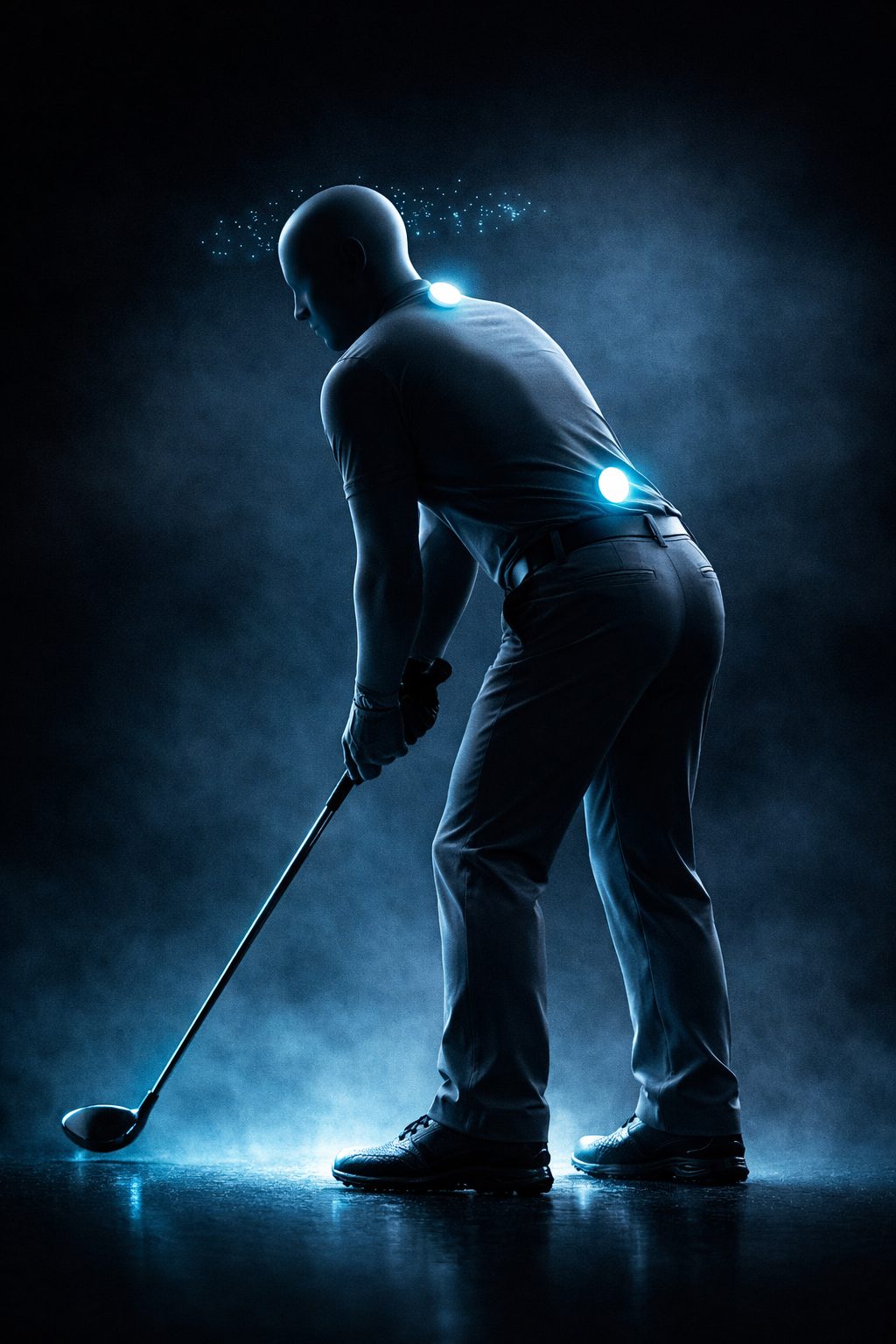
A sensor in your earbud and on your back catch the subtle movements you can't feel. Stay steady and you hear nothing; drift and a tone flags exactly which fault crept in.

Within about a second of each rep, MoCaddieIQ speaks the single most important thing — not a wall of numbers. Eyes up, hands free, fully focused on the next ball.

Most amateurs leave 8–15 mph on the table not because they're weak, but because the kinematic sequence fires in the wrong order. Speed Lab tells you exactly where your speed is leaking — and runs an 8-week protocol that fills the gap.

Every rep is logged automatically. MoCaddieIQ tracks the trend lines and your consistency score over time — the number that actually translates to lower rounds.
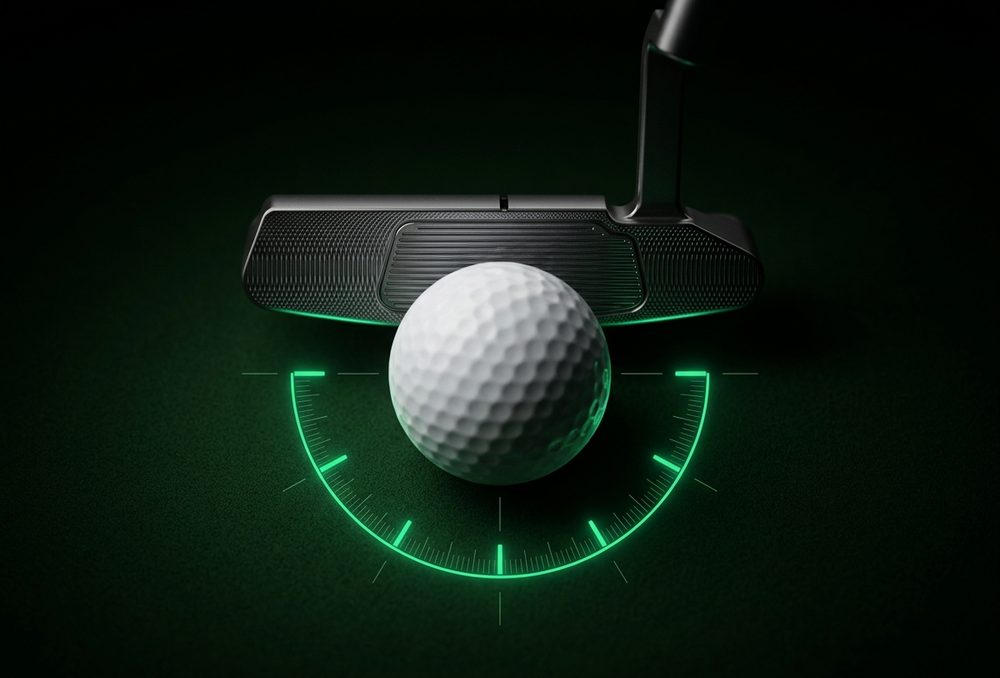
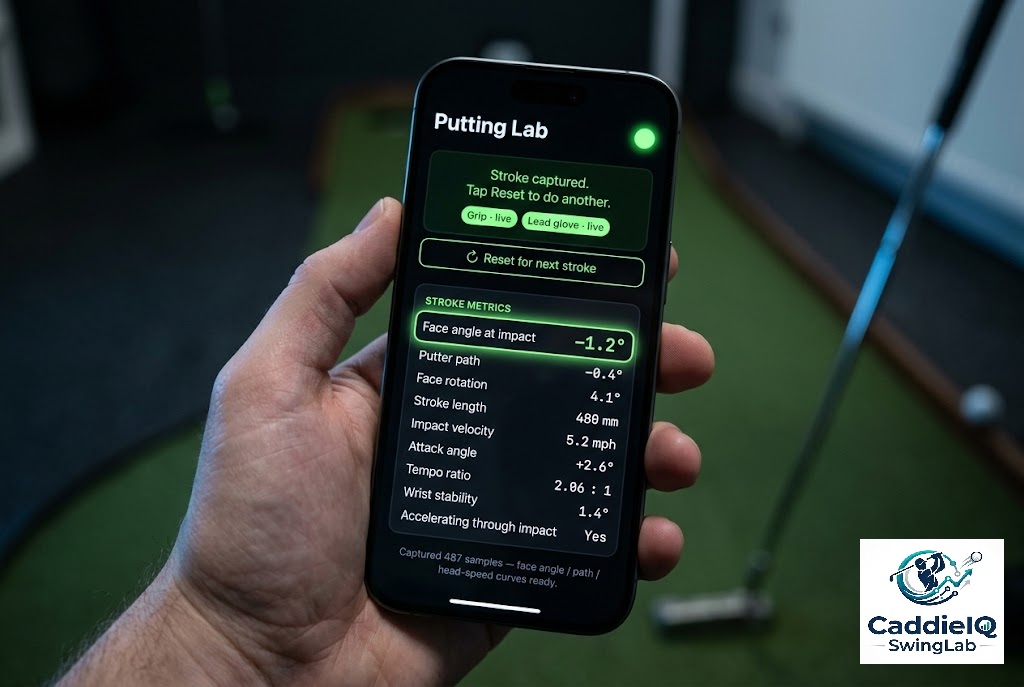
Each stroke is broken into the numbers that actually drop putts — all read from the grip + back-of-hand sensors.
85% of a putt's starting direction comes from where the face is pointing at impact. The remaining 15% comes from path. Get those two right and you've controlled the line — pace is then the other half of the equation.
Beneath the stroke itself, a small chain of mechanics decides whether the ball rolls cleanly or skids — and whether your distance control holds up under pressure.
| Stage | What it does | Tour range |
|---|---|---|
| 1 | Face angle at impact | ±1° square — controls 85% of start line |
| 2 | Putter path | ±0.5° in-to-out — controls 15% of start line |
| 3 | Strike spot on face | ±5 mm of sweet spot — controls energy transfer |
| 4 | Impact speed | ±2% on 20 ft putts — controls distance |
| 5 | Skid → roll transition | 2–3 inches of skid — controls whether the ball holds line |
Amateurs typically miss on face angle by ±4–5° and on impact speed by ±10%. That's why short putts get missed despite a "good-looking" stroke. The sensors catch both — every putt, every read.

Open or square to your line at impact — where the ball actually starts.

In-to-out or out-to-in through the ball.

How the face opens and closes through the arc.

Your backswing-to-through rhythm, putt after putt.

Backstroke amplitude — matched to the putt you're facing.

Pace through the ball — and whether you're accelerating.

Striking up or down on the ball for a true roll.

The lead-hand breakdown that wrecks short putts.

How repeatable your stroke is — the score that drops putts.
Up to seven wearable sensors map your kinematic sequence — hips, torso, arms, club — and turn it into the numbers a tour lab measures, with the feedback that actually fixes faults.
A full swing is a kinematic chain: ground reaction → hips → torso → arms → wrists → club. Each link accelerates the next. Get the order right and the speeds compound. Get it wrong and the engine burns out before the ball.
Most coaching focuses on the visible parts — the takeaway, the top, impact. But the energy chain is invisible without sensors. Camera-only systems see WHAT happens. The kinematic chain tells you WHY.
| Link | Peak (tour) | What it does |
|---|---|---|
| 1 | 1.5–2× bodyweight | Ground reaction force — vertical push that initiates rotation |
| 2 | 500–700°/sec | Hips — the first rotational mover, sets the chain |
| 3 | 800–1000°/sec | Torso — adds rotation on top of hips, builds X-Factor |
| 4 | 1500–2000°/sec | Lead arm — fires after the torso, delivers the club |
| 5 | ~30 mph hand | Wrist release — the final whip, adds 30–40% to clubhead speed |
| 6 | 110–125 mph | Clubhead at impact — the sum of every previous link |
The Full Swing Analyser measures every link and the timing between them. It catches the faults a single camera angle can't show — like a torso firing 80 ms before the hips, or a wrist releasing at 50% down instead of 65%.
Each sensor catches its own link in the chain. The app fuses them into one sequence so you see — and feel — what a perfect "hips → torso → arms → club" actually is.
The lumbar sensor catches the moment your hips start back toward the target — the first link, and the timing every tour swing is built on.
The upper-back sensor measures shoulder rotation and the X-Factor — the stretch between hips and shoulders at the top.
Bicep and glove sensors track lead-arm bend, wrist hinge and the release through impact.
The grip-butt sensor reads club face, path, swing plane, shaft lean and clubhead speed at the ball.
Tap any tile to see what it is, why it matters, how I measure it, and what the tour benchmark looks like.

Open, square or shut to your target line.

In-to-out or out-to-in through the ball.

The shaft's reference line from ball to club at the top.

How far you rotate at the top — the engine of the swing.

The single biggest driver of distance.

Striking up on driver, down on irons — or the other way around.

Backswing to downswing ratio — the rhythm tour pros share.

The stretch between shoulders and hips at the top — stored power.

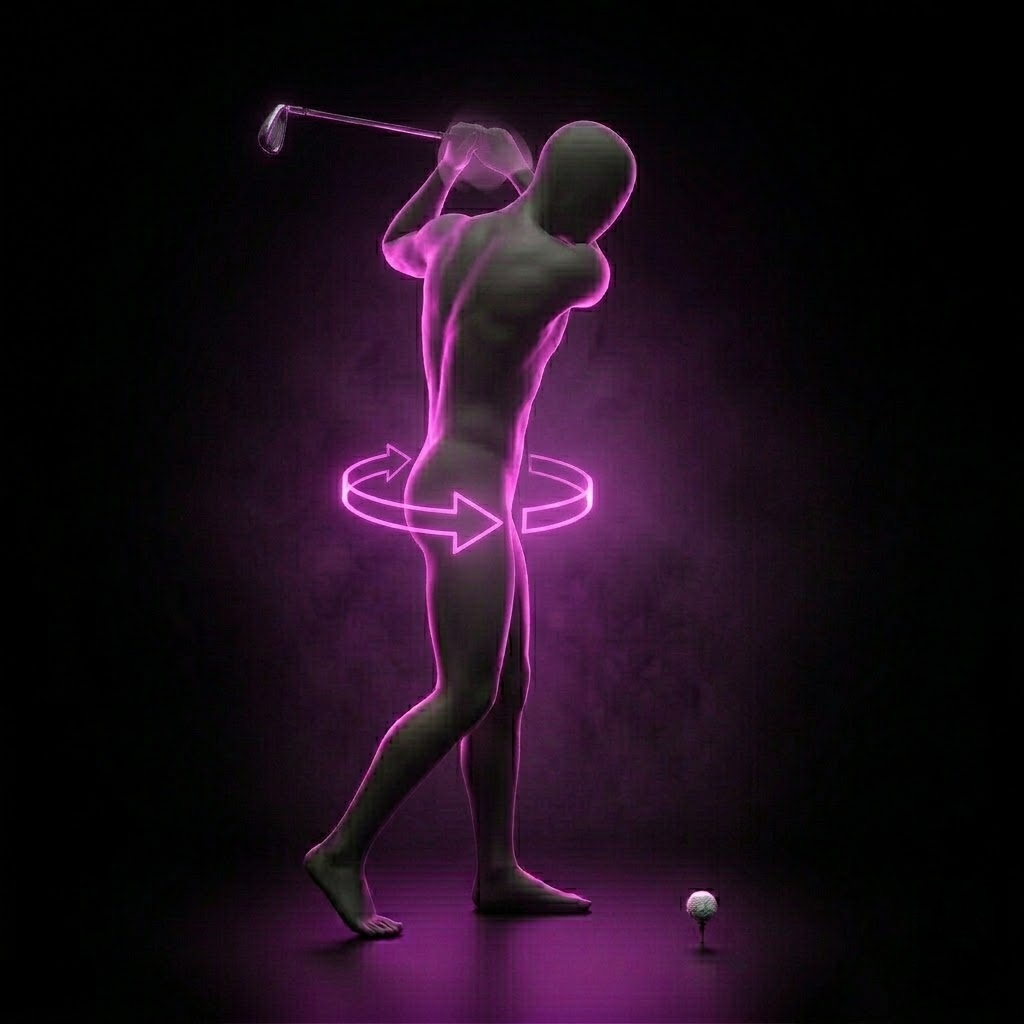
The first rotational mover — sets the entire chain in motion.

Lead-foot pressure at impact — the ground reaction signature.

The textbook hips-open, shaft-leaning shape at the moment of truth.

When you let the club go — too early = casting, too late = stuck.
Your CaddieIQ profile tells the system what you can act on. Beginners hear plain language and one thing per swing; advanced players get the full panel. No information overload, no jargon you can't use.
Most amateur faults trace back to a rushed transition. Lock tempo first and a surprising number of other faults shrink on their own.
One swing is noise. The number that matters is your spread across 10 — a tight scatter beats a great one-off every time.
The system ranks faults so you hear the one fix that clears the most downstream issues. Don't chase symptoms.
Live audio through your earbuds means you keep your eyes on the ball, not a screen. The feedback lands while the swing is still fresh.
The single biggest predictor of a repeatable swing is rhythm. The Tempo Trainer plays a live metronome to match — then shows you exactly how close you got.
Tempo is the ratio between backswing time and downswing time. Tour pros are remarkably consistent at roughly 3:1 — the downswing is one-third the time of the backswing. It's not a counted beat. It's how the body's elastic muscle system loads and releases at peak efficiency.
The backswing stretches the muscle-tendon units across the body. That stretch stores elastic energy. The transition holds the stretch for a fraction of a second. The downswing releases it. Too fast a backswing and there's no stretch. Too slow a transition and the elasticity decays. The 3:1 ratio is where energy storage peaks.
| Phase | Time (tour) | Why |
|---|---|---|
| Backswing | ~0.85 sec | Loads the muscle stretch — too fast, no stretch; too slow, you fall off rhythm |
| Transition | ~0.10 sec | Holds the stretch — where elastic energy peaks |
| Downswing | ~0.28 sec | Releases the stretch — three times faster than the backswing |
| Total | ~1.23 sec | Tour average; amateurs are typically ~1.05 sec — rushed |
Speed comes from rhythm before it comes from effort. Most amateurs swing harder than tour pros and still hit it shorter — because their tempo broke the elastic chain.
Start with the tour 3:1 ratio — or dial in your own target. The metronome ticks through your earbuds.
Grip + lumbar sensors detect start, top-of-backswing and impact to the millisecond — no stopwatch in sight.
A subtle tone tells you to slow down or speed up before impact — you can adjust the same swing.
Your exact ratio appears after every shot. Trend it over the session and the average moves toward 3:1.
Tap any tile for what it is, why it matters and the tour benchmark.

How long it takes you to reach the top.

From top to ball — where most amateurs rush.

Back-to-down — the rhythm tour pros share.

The change of direction — smooth or sudden.
Let the beat in before you swing real shots. Five rehearsal swings is enough to lock the rhythm.
Practise tempo at 50% before adding power. Speed without rhythm is just noise.
A 2.7:1 swing repeated 10 times beats one perfect 3:1 and nine wild ones.
Your average and your scatter both matter — track both in the app.
An on-plane swing is repeatable. The Swing Plane Trainer checks your shaft against your ideal plane at the three checkpoints that matter — and tells you the moment you drift.
Swing plane is the angle the shaft travels through space during the swing. Three checkpoints decide repeatability: halfway-back, top of swing, halfway-down. On YOUR plane at all three and the ball flight repeats. Change plane between any two and the brain has to time a compensation perfectly — every swing, under pressure.
There's no single ideal plane. One-plane swingers (Hogan, Furyk) stay on a single shaft line throughout. Two-plane swingers (Couples, Spieth) shift between a steeper top and a shallower delivery. Both can win majors. What matters is choosing one and staying consistent.
| Checkpoint | What we measure | Tour benchmark |
|---|---|---|
| Halfway back | Shaft angle vs original address plane | ±2° band |
| Top of swing | Club position relative to head + shoulder turn | Tightly grouped session-over-session |
| Halfway down | Shaft angle on the return path | ±2° band |
| Re-route distance | How far you move between top and halfway-down | Pros do this consistently if they do it at all |
The Swing Plane Trainer reads all three checkpoints in real time. An audio cue confirms when you're on YOUR plane; silence means drift. Over reps, the brain locks the position without you having to think about it.
A short calibration at address sets your reference. There's no single "right" plane — there's your plane, repeated.
Halfway back, top, halfway down — the three moments coaches look at on video.
Grip + lead bicep + lumbar give a precise shaft plane reading at each checkpoint.
A tone confirms when you're on plane; silence means drift. No screen needed.

Where your takeaway tells you everything.

Across the line, laid off, or perfectly on.

The truth about your transition.

One-plane vs two-plane — they're both fine, if repeated.

The classic slice fault — caught early.
Plane is a feel before it's a number. Half-speed swings let the body learn what "on plane" actually is.
Fix halfway-back this week, top next week. Trying to fix all three at once fixes nothing.
Your plane is a band you swing within, not a wire. Tight band = consistent shot shape.
Hear the tone, feel the position, repeat. The audio shortcuts the feedback loop.
Move slowly into a position. A tone confirms the instant you're correct; silence means you're off. Pure feel training — no screen, just ears.
Motor-learning research shows that positions held under slow movement embed faster than the same positions hit at full speed. The brain encodes the shape deeper when it isn't also being asked to produce force. Drill Mode uses sensor-verified position-holding to build the move at low load before adding speed.
The principle is borrowed from physical therapy and athletic training: slow eccentric reps build motor patterns faster than ballistic ones. In golf, this is why a half-speed swing drill is more useful than 20 full swings at the range. The brain isn't filtering out load — it's learning the move.
| Drill | Position trained | Reps to embed (typical) |
|---|---|---|
| Takeaway | First 3 ft of the backswing | ~50 mindful reps |
| Halfway-back | Hands at hip height, shaft parallel | ~50 reps |
| Top | Shoulders ~90°, hips ~45° | ~100 reps |
| Transition | Hips lead, hands wait | ~150 reps — hardest move |
| Impact | Shaft lean, head behind ball | ~100 reps |
Drill Mode adds the one thing the gym mirror can't: a tone the instant the sensors confirm you're in the right position. The brain gets immediate reward feedback — and the motor pattern locks faster.
Takeaway, top, transition, impact, release — pick the link in the chain you want to groove.
Sensors track your body and club position in real time as you ease into the checkpoint.
You hear a tone when you're in the target zone — your nervous system learns the position without a screen.
Repetitions burn the position into muscle memory. Then take it to the ball.
Tap any drill to see what it trains, how to do it, and what to listen for.

First three feet — sets the entire swing.

Shaft parallel, wrists set, on plane.

Full turn, club position checked, ready to fire.

Hips first — the timing fix that fixes everything else.

Shaft lean, clubface, body alignment at the ball.

Full extension, balanced finish, club at parallel.
Drills work because the brain learns positions without the chaos of speed. Speed comes last.
Tones first. Numbers second. If the feel isn't there, the numbers won't stick.
Same drill every day = plateau. Rotate so the body keeps adapting.
The whole point is removing the screen. Hear the tone, feel the move, swing.
A sensor in your earbud and one on your back catch the subtle movements you can't feel. Stay steady and you hear nothing; drift and a tone flags exactly which fault crept in.
Head dip, hip sway, reverse pivot, spine flatten — these are the silent body movements that wreck strike consistency. They aren't failures of effort. They're the body solving a problem you didn't know existed: balance, force production, or vision-on-ball compensation. The IMUs catch them at the millimeter level.
Once you see why each compensation happens, the fix is rarely "just stay still" — it's usually upstream. Hip sway traces back to weak rotational stability. Head dip is often a vision compensation. Reverse pivot is a weight-shift mechanic. The sensors expose the root.
| Hidden fault | Why it happens | Cost |
|---|---|---|
| Head dip | Trying to keep eye on ball through rotation | Low-point shifts — fat/thin contact |
| Hip sway | Lacking core stability to coil without sliding | Loss of X-Factor — 4–6 mph leak |
| Reverse pivot | Weight stays on lead foot in backswing | 5–8 mph lost + pull-slice tendency |
| Spine flatten | Standing up out of posture before impact | Thin shots, blocks, snap-hooks |
Stillness Mode is the only one where SILENCE is the goal. If you hear a tone, something moved. The earbud IMU catches head movement under a millimeter; the lumbar catches sway under three.
An IMU inside the earbud picks up the smallest head dip, lift or sway — movements you genuinely can't feel.
The waist sensor tracks hip sway, reverse pivot and spine-angle change.
Silence = stillness. Tone = something moved — and you hear which one.
See exactly when and where you moved across your session — focus your next practice.

The vertical move that wrecks contact height.

Lateral slide off the ball, away from target.

Weight going the wrong way on the backswing.

Early extension — the "stand-up" fault.

Holding your address angles through the swing.
Take the ball out of the equation. Stillness without the urge to swing at something is the foundation.
You're not chasing a number — you're chasing nothing. Quiet sensor = quiet body.
Slow swings first, then half-speed, then full. Stillness scales with speed if you build it right.
Within about a second of each rep, MoCaddieIQ speaks the single most important thing — not a wall of numbers. Eyes up, hands free, fully focused on the next ball.
Every swing fault has a root cause and a sequence of compensations. A bad cue makes you fix a compensation instead of the root, and the cycle repeats. Voice Coaching uses fault-hierarchy analysis: from the cluster of issues the sensors detect, it picks the ONE that's the root, ignores the symptoms, and gives the cue that resolves the cascade.
The challenge isn't measuring faults — modern sensors detect dozens. The challenge is choosing the RIGHT one. Tour coaches train for years to spot root causes. The sensors give us the same level of pattern recognition through data, every swing, every rep.
| Visible fault | Common root cause | What to fix first |
|---|---|---|
| Slice | Out-to-in path with open face | Path — face is a downstream symptom |
| Pull-hook | Closed face with early release | Release timing — face follows |
| Fat shots | Weight back at impact, steep AoA | Pressure shift to lead side |
| Thin shots | Standing up early (early extension) | Posture maintenance through impact |
| Snap-hook | Hands rotating past pivot | Body rotation through impact |
The cue lands in your earbud within about a second of impact. Plain language for beginners, root-cause language for improvers, tour-data for advanced users. Same fault, three voices — calibrated to your profile.
Every metric is computed in milliseconds the moment your swing finishes.
The system picks the ONE root-cause fault that matters most for this swing — not three things at once.
The wording is pulled from your profile — plain language for beginners, real numbers for the data-hungry.
Works through any Bluetooth earbuds you already own. No new hardware to charge.
The same ball flight, mapped to three different golfers' brains. Here's what each one hears.
The fault ranking is doing the work. If it's quiet on something, that something is fine right now.
Don't try to fix three things at once. Lock the cue, repeat it, then the next one comes naturally.
The cues land best when there's nothing else competing for your attention. Find a quiet bay.
Most amateurs leave 8–15 mph on the table not because they're weak, but because the kinematic sequence fires in the wrong order. Speed Lab tells you exactly where your speed is leaking — and runs an 8-week protocol that fills the gap.
Clubhead speed is a sequential acceleration cascade — each body segment fires in turn, each one accelerating the next, like cracking a whip. Tour pros nail the sequence. Amateurs leak energy at every link.
If each segment is accelerated by the previous one peaking at the right moment, the speeds compound. The tour player is running a four-stage rocket where each stage ignites the next at exactly the right instant. Get the order wrong and the engine burns out before the ball.
| Stage | Body segment | Peak rotational speed (tour) | What it does |
|---|---|---|---|
| 1 | Ground reaction force | 1.5–2× bodyweight | Initial push from feet into the ground |
| 2 | Hips | 500–700°/sec | First rotational mover |
| 3 | Torso / thorax | 800–1000°/sec | Fires AFTER the hips |
| 4 | Lead arm | 1500–2000°/sec | Fires AFTER the torso |
| 5 | Wrist release | hand ~30 mph | Final whip — adds 30–40% to clubhead speed |
| 6 | Clubhead | 110–125 mph (driver) | The sum of all the above |
The biggest amateur fault — torso firing before hips — costs an average of 5–7 mph on its own. The second biggest — early wrist release ("casting") — burns 30–40% of the available energy before the ball. Both are sequencing problems, not strength problems. Speed Lab is built around fixing them.
Three phases. The audit takes one practice session. The protocol takes 8 weeks. The verification happens every rep along the way.
One 5-min, 20-swing session reads your clubhead speed, every body segment's peak speed, the timing of your kinematic sequence, your X-Factor stretch and your lag angle. The output is a 3-card deficit screen — where your speed is leaking and by how many mph.
Based on the audit, you start one of three labs — Sequence Lab, Hip Speed Lab or Release Lab — each an 8-week protocol of drills calibrated to your weak link. 3–4 sessions a week, 20–30 min each, audio cues live in your earbuds.
The sensors confirm whether each rep used the right pattern — not just the outcome. You hear a satisfying tone when the sequence fires correctly, a corrective tone when it reverts. Real before-after evidence per metric at week 8.
After eight weeks you re-run the audit. Most users gain 5–9 mph from a single lab. Then we point you at the next biggest leak — and combined, 13–15 mph total over 12–16 weeks is realistic for most amateurs.
Tap any tile for what it is, why it matters, and the tour benchmark.

The headline number every gain is measured against.

The first rotational mover — and the most-underused lever for amateurs.

The order each segment fires in — and where energy is being burned out of order.

How much rotational separation you store between hips and shoulders — the potential energy bank.

How long the wrists hold the angle on the way down — late release is free speed.

The yardage your numbers project to — and the gain available if you close the deficits.
Your audit picks the right lab. You're never running a protocol that doesn't match your weak link.
Running two protocols at once dilutes both. Finish a lab. Re-audit. Move to the next leak.
Weeks 1–2 of every lab are deliberately slow. Anti-instinct training works at low load — adding speed too early reverts the old pattern.
The tone in your earbud is doing more work than you think. It rewires the motor pattern under the conscious noise. Wear earbuds for every drill session.
Week 8 audit numbers are the truth. If your sequence integrity rose from 35% to 80%, that gain is locked in your nervous system — not just in this practice session.
Every rep is logged automatically. MoCaddieIQ tracks the trend lines and your consistency score over time — the number that actually translates to lower rounds.
Deliberate practice research (Anders Ericsson and others) shows that improvement happens via specific feedback loops, not raw rep counts. Hitting 500 balls a week without feedback is worse than 200 balls with the right one. Progress & Consistency surfaces the curves that matter: trend lines, scatter, and benchmark gaps.
The number that lowers scores isn't your best-ever swing. It's the tightness of your scatter. Tour pros aren't better because they swing harder — they're better because their tenth swing looks like their first. The CaddieIQ system measures this directly: how consistent are you across a session, across a week, across a season.
| Metric | What it tells you | Time to move |
|---|---|---|
| Trend line | Direction of travel for any metric | Visible by ~4 weeks of practice |
| Scatter / consistency | How repeatable your move is | Tightens over 8–12 weeks |
| Benchmark gap | Distance from tour or peer standards | Closes session by session |
| Streaks | Habit reinforcement | Daily — gamified |
Every rep you take with the sensors on is captured automatically. Nothing to log. Nothing to forget. The curves do the work — you just have to keep showing up.
Every rep is sensor-streamed to the app — no logging, no buttons, no admin.
See where you're improving, where you've plateaued, where you've regressed.
One number summarising how repeatable your swing is, session to session.
Vs tour benchmarks, vs your own best, or straight to your coach in PDF.

Every metric, session over session.

One number — the metric that lowers your scores.

Quick read of what each session delivered.

Personal bests and consistency streaks to keep you practising.

Your scatter vs tour scatter — the honest mirror.
One bad session is noise. The trend line is the truth — look at where the line is going, not where it just dipped.
Pick a single metric to improve per month. Spread yourself thin and nothing moves.
Same drill, same conditions, same club. Apples to apples is the only useful comparison.
A tighter scatter is the win that lowers your scores. Loud distance gains are exciting; tight scatter wins money.
MoCaddieIQ coaches a complete fault library — Setup, Backswing, Downswing, Release — each with its real cause, the optimal range, the trigger that fires it, and the fix. The same framework tour coaches use, running on every swing.
A good coach watches 100 swings and says one sentence: "you're early-extending — fix that and three other faults disappear." Our catalogue is built to do the same: it knows which faults compound, what's actually causing each one in your body, and which single change has the most leverage for you.
The library maps one-to-one onto the framework golf's best coaches screen against — and the numbers behind it come from the research that actually measured them: kinematic-sequence studies, a million-plus-swing wrist database, and force-plate labs.
| Phase | What we catch | Example faults |
|---|---|---|
| Setup | Posture errors baked in before you move | S-posture (lower-back hollow), C-posture (slouch) |
| Backswing | Lost angles & mis-load | Loss of posture, flat shoulder turn, reverse spine, sway |
| Downswing | Sequence & lower-body faults | Over-the-top, early extension, slide, lunge, hanging back |
| Release | How energy reaches the ball | Casting, flip/scoop, chicken wing, flying elbow |
Each fault carries an honest badge for how it's measured. Angles and timing — pelvic tilt, shoulder turn, the kinematic sequence, wrist position — are read directly from the sensors. Distance-based faults like sway or hanging back need a ground reference, so they're flagged as such rather than dressed up as precision they don't have.
Every fault is checked at the exact moment it shows up — at address, at the top, in transition, through impact.
Faults compound. The library knows that early extension causes the flip — so it coaches the cause, not the three symptoms.
Each fault carries a cost in yards or strokes. You hear the most expensive one first, not a list of eight.
Every fault links to the mobility or technique drill that addresses its real, physical cause.
Cause, optimal range, the trigger, and the fix — for every fault we coach.

Lower back over-arched at address — locks the hips.

Rounded upper back chokes the shoulder turn.

Standing up out of your spine angle mid-swing.

Leaning at the target — the back-pain fault.

Torso beats the hips — the classic slice path.

Hips thrust at the ball — 67% of golfers do it.

Wrist angle dumped early — lost speed.

Lead elbow buckles through impact.

The separation that actually makes speed.
Three two-minute mobility checks, free, in the app. Your body's restrictions predict the swing faults you're most likely to fight — so you can start fixing the cause today, before any sensor arrives.
You can't rotate through a hip that won't turn, or hold posture on ankles that won't bend. The most common swing faults are downstream of a handful of mobility limitations — so a simple physical screen predicts them with surprising accuracy, before you've hit a ball.
| Check | What it reveals | Faults it predicts |
|---|---|---|
| Overhead deep squat | Ankle & hip rigidity under load | Early extension, loss of posture |
| Pelvic leveling | Neuromuscular control of the pelvis | Early extension, setup-posture errors |
| Rotational separation | Can the torso turn on a still pelvis? | Over-the-top, early wrist release |
Answer three honest questions about what your body does, and the app flags the faults you're predisposed to — with the mobility work that frees them up. Then, when you pair sensors, MoCaddieIQ confirms whether the fault actually shows up in your real swing.
Club overhead, squat low without heels lifting. Flags the ankle & hip rigidity behind early extension.
Tilt the pelvis in your golf posture, chest still. Flags the pelvic control behind posture faults.
Turn the hips with the shoulders frozen. Flags the separation behind over-the-top and casting.
Answer all three and the app names your high-risk faults — and links straight to the fix for each.
Two minutes, no equipment — what each movement reveals and the faults it predicts.

Reveals ankle & hip rigidity.

Reveals pelvic control.

Reveals torso–pelvis separation.
A 3D model of the swing with two plane loops traced around it — green for the tour-reference plane, red for yours. They draw on in real time as the swing plays. The gap between them is your lesson.
"Your club is two degrees steep" is abstract. Seeing your red plane loop balloon outside the green tour line at the top of the backswing is instant. The Visualiser traces the path your clubhead travels through the whole swing and draws it as a 3D loop around the model — exactly the overlay a coach scribbles on a video, but in space and from any angle.
| Element | What it shows |
|---|---|
| Green loop | The tour-reference swing plane — your target |
| Red loop | Your own plane, driven by your sensors |
| The gap | Where and how much you're off — over-the-top, laid off, steep, shallow |
| Live trace | The red line draws on as you swing and stops at your finish — no endless loop |
Spin the model to any angle — face-on, down-the-line, top-down — and scrub the swing frame by frame. Sensor-mount dots on the body light up green for every sensor you've paired, so you can see exactly what's feeding the picture.
The reference loop the best players swing on, shown in full from the first frame.
Traced live from your clubhead path, drawing on in step with the swing as it plays.
Spin, zoom and scrub. See the move face-on, down-the-line, or from above — at full speed or frame by frame.
Each mount point glows when its sensor is paired, so you can see your kit feeding the model.
Two plane loops, the gap between them, and the sensors feeding the picture.

The green reference loop — your target.

The red loop, traced live from your swing.

Where, and how much, you’re off plane.

Mount points glow as you pair sensors.
Most bad shots are decided at address. With a club sensor and a one-time calibration, MoCaddieIQ learns your club length — then coaches your distance from the ball, ball position in your stance, width and posture, so you build a setup that holds up on the course.
A sensor on the club measures the shaft's angle directly. Rest the clubhead on the ground at address and hold for a second: we know how high your hands are and the angle of the shaft, which is all the geometry we need to solve your club's exact length — no measuring tape, no typing it in.
Once we know the club length, the clubhead's point on the ground is your ball position. Combined with sensors on your ankles, that unlocks the setup faults that quietly wreck good swings — and the ones golfers almost never check themselves.
| What we coach | How |
|---|---|
| Distance from the ball | Too close or reaching — measured from your feet to the soled clubhead |
| Ball position in stance | Too far forward / back, relative to your foot line |
| Stance width | From the spacing of your ankle sensors |
| Posture | Spine angle and tilt from the back sensors |
The point isn't to lecture you to the millimetre — it's to build a setup you can repeat on the first tee without a coach standing over you. Learn it on the range, own it on the course.
Sole the club at address and hold. We solve your exact club length from your hand height and the measured shaft angle.
With club length known, the clubhead's ground point becomes your ball position — no camera required.
Distance, ball position, width and posture — compared against the ideal for the club in your hands.
Repeat the right setup until it’s automatic — so it holds up under pressure, far from the practice mat.
One calibration unlocks the four setup numbers that decide the shot.

Sole the club once; we learn its length.

Too close, or reaching for it.

Too far forward or back in your stance.

Width and spine angle at address.
Same sensor everywhere — buy more and mount them wherever you need. Here's what each step unlocks.
MoCaddieIQ is coming to the CaddieIQ family. Get the app now and you'll be first to know when the sensors land.
Sensor hardware in development. Capabilities shown reflect the planned system.